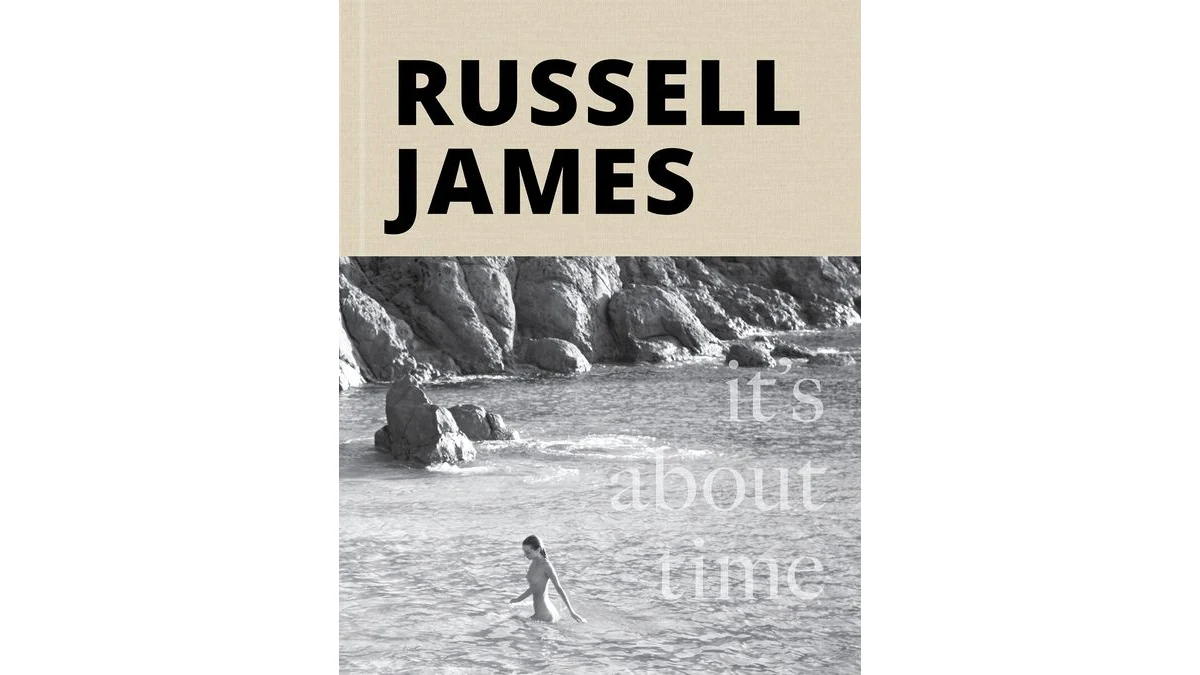
On the cover of It’s About Time , a small figure stands in water below a rocky shoreline. Russell James’s name occupies a broad band above the photograph. The contrast makes an inviting introduction to a career book: the name is familiar, while the frame offers a place to look beyond it.
James’s own introduction to the volume places its journey between 1996 and 2026. It brings fashion, portraits, landscapes and cultural work together. The photographer’s range is the starting point, but a viewer can make the comparison more specific by watching what a body does within each frame.
Let the setting do some of the work
Digital Camera World’s November 17 selection includes Hoyt Richards diving above the sea in Crete in 1996 and Lily Aldridge standing on a coastal boulder in 2015. In the first, the body’s airborne angle gives the surrounding water a direction. In the second, the rock establishes a place for the figure and separates her from the sea around it.
Those are different relationships with a similar setting. One depends on a suspended action, the other on a place to stand. Comparing them this way keeps the reading attached to a visible choice rather than treating every coastal photograph as the same mood.
This is a source-based first encounter with the published selection, rather than a review based on reading the complete volume.
The question of setting has a useful counterpart in our Julia Fullerton-Batten article, which follows the research and staging behind photographs. Looking at where the person stands can lead back to the decisions that made the scene possible.
A book changes the neighbors
A photobook gives photographs another context through selection and sequence. Pictures first encountered separately can begin to describe a continuing practice when they appear together.
The publisher’s record identifies Nadine Barth and Nicholas Fahey as editors, with a foreword by Kris Jenner. It describes a mix of unpublished material, new portraits and earlier work. James’s official page also places his work with Indigenous communities within the book’s wider journey. These are distinct projects and relationships, rather than interchangeable examples of a single experience.
Our Found Dreams article about Elizaveta Porodina considers another book in which pictures made for different purposes meet on the page. The useful comparison is editorial: what becomes visible when an image gains a different neighbor?
I explore a related question from the making side in my Kisau post on Tim Walker’s fashion photography . I own Kisau Photography. That post follows how a sketch, a location and collaborators give a photograph its world. With James’s selection, the viewing question comes afterward: which decisions remain recognizable when the original assignment is no longer the organizing label?
Check the edition as well as the date
The US publisher identifies a 372-page English hardcover, ISBN 9781923094260, edited by Barth and Fahey. Its current page lists December 15, 2026. ACC Art Books’ US listing still gives December 1 for the same ISBN, while James’s own page advertises worldwide direct shipping from November 17. Those records do not establish one universal release date.
The matching It’s About Time hardcover on Amazon provides a separate US purchase route for that edition. Consult the selected seller’s current delivery information. The bibliographic and photographic claims here come from the publisher, photographer and attributed reporting.
For a first look, keep the shoreline comparison in mind as you browse the official selection. Ask where the figure gets its position, how the surrounding space directs attention and what changes when action gives way to stillness. Those are questions you can carry into the book without deciding in advance that every image needs to tell the same story.
FAQ
Is this Russell James’s first book?
No. His official books page lists earlier volumes. This publication is presented as a broad journey across his career.