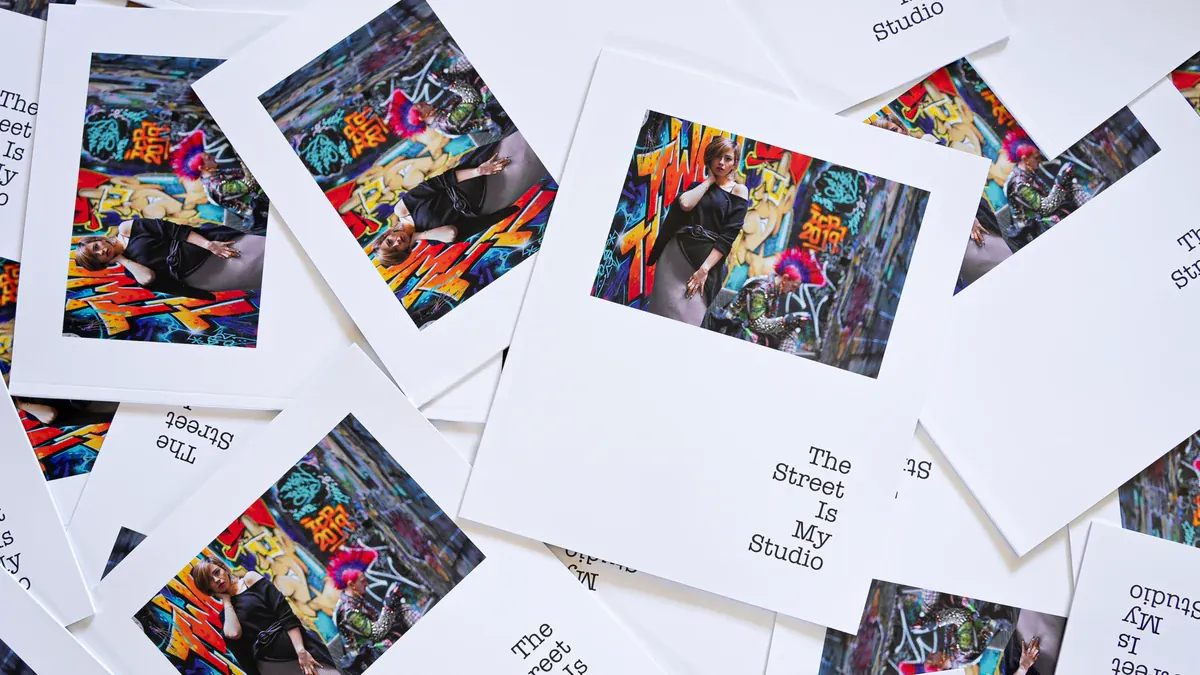
A street can loosen a photographer’s habits even when the camera usually works on a commissioned set. The Phoblographer’s renewed profile of Joshua Lawrence describes a commercial and fashion photographer who goes out with a camera to notice ordinary human moments for himself. That distinction between an assignment and a personal walk resonates with my Kisau Photography project, The Street Is My Studio. Our methods differ, but both depend on giving public space a role in the picture.
The Phoblographer revisited an earlier Joshua Lawrence interview on September 26, which prompts this comparison with my Kisau work.
The street is more than a backdrop
Lawrence told the Phoblographer that his personal work begins by walking and noticing a person, color, or shape, without fixing a scene in advance. The publication revisited an earlier interview on September 26, so his remarks are a record of that conversation, not a newly conducted interview. His preference for unplanned observation differs from a fashion brief’s team, wardrobe, and intended deliverables. The common photographic problem is still how to stay alert to the light and relationships a real place offers.
At Kisau Photography , I made directed portraits with collaborators in Melbourne’s streets. I did not treat the photographs as candid documents of strangers. The city’s walls, alleys, movement, and available light shaped where I placed people and how they could express themselves. The street contributed texture and energy that a controlled backdrop could not supply. This is a first-person account of my own practice, not an independent assessment of Kisau’s work.
Two routes from fashion into personal work
Lawrence’s route is to set the brief aside. He describes personal photographs as a way to attend to humanity and ordinary life, with the subject arriving during a walk. My route kept the collaboration and some of the direction familiar from fashion and editorial work, then let the location change the portrait. A wall or a passing patch of light could redirect the planned frame. Neither approach makes street photography a single technique. They show that street photography can influence how a photographer sees even when the final image is a directed portrait.
The distinction matters for readers and subjects. A spontaneous public scene and an agreed portrait involve different relationships, expectations, and control. Calling both simply “street” can hide those differences. Lawrence’s photographs pursue moments he finds. Kisau’s Melbourne project built moments with participants. The productive overlap is attention to what the setting contributes rather than treating it as interchangeable scenery.
From a walk to a sequence
My The Street Is My Studio zine took the Melbourne street portraits into print. Selecting and sequencing images made the recurring relationship between people and place visible across pages. The project later expanded into The Melbourne Portraits Project: A Photographic Ode. Kisau’s account of the zine’s development describes that small experiment as a route into the larger book. The street became a repeated visual collaborator rather than a one-off location.
That is the connection the Phoblographer profile clarifies for me. Personal photography creates room to notice a theme before it becomes a polished project. Whether an image is found during a walk or built with a collaborator, a photographer can return to the contact sheet and ask what the place keeps giving back. A zine then tests whether those individual encounters form a sustained visual argument.
What an assignment can borrow from a personal walk
The commercial and personal sides of a practice need not share the same output to influence each other. A fashion commission usually begins with a brief and a team. A walk begins with the photographer’s attention. Bringing the second mode into the first does not mean abandoning the brief. It can mean arriving early enough to read the location, watching where light crosses a wall, and allowing a collaborator to move rather than treating every pose as a fixed instruction. A location then becomes a source of decisions.
The reverse transfer matters too. Fashion work can teach a photographer to see silhouette, gesture, color relationships, and the edge of a frame. Those habits can make an unscripted street photograph more deliberate without staging it. Lawrence’s remarks about noticing color and shape suggest exactly that crossover. The street is not a place where skill vanishes in favor of luck. It is where trained attention meets events the photographer does not control.
Editing is where the personal theme becomes clear
A single frame can be strong for many reasons. It may have an expressive face, an unusual color, or a perfectly timed gesture. A zine asks a different question: do the frames become more meaningful in sequence? The Street Is My Studio let me test how repeated encounters with Melbourne’s streets connected portraits made with different collaborators. The printed form gave pauses and transitions that an individual online post could not provide. That is an account of my editorial choice, not a claim that everyone should make a zine.
Lawrence’s personal work and my directed portraits should not be collapsed into one genre. His account emphasizes encountering life without a shot list. My zine grew from collaborations in which people agreed to take part. Yet both examples show the value of personal work outside a client’s immediate deliverable. It lets a photographer discover a recurring visual question, then decide whether the answer belongs in a frame, a series, or a book.
A useful exercise is to revisit a contact sheet from a location-based assignment and remove the frames chosen only because they satisfied the brief. Look for the pictures where the place affected the pose, light, or interaction in an unexpected way. Then compare those with images made on an uncommissioned walk. The difference can reveal what the brief provided and what the photographer’s own attention brought to the street.