Eva Verbeeck’s new book, America’s Girls, On the Edge of a Dream, began with an image of American adolescence formed at a distance. She grew up in Belgium absorbing pop music, magazines, and television from the United States. Over six years, she traveled through 28 states and photographed more than 400 girls and young women. The project’s strength lies in how it moves from that imported fantasy toward the choices of the people in front of her camera.
The sitter helps decide what the image says
In CNN’s interview , Verbeeck explains that she invited participants through schools, youth groups, and local communities rather than selecting strangers on the street. She asked them to bring an object, clothing, or another detail that mattered to them. A bike, rocks, a pet, or a friend could enter the portrait because a subject chose it. That simple decision shifts the prop from decorative shorthand to a piece of self-description.
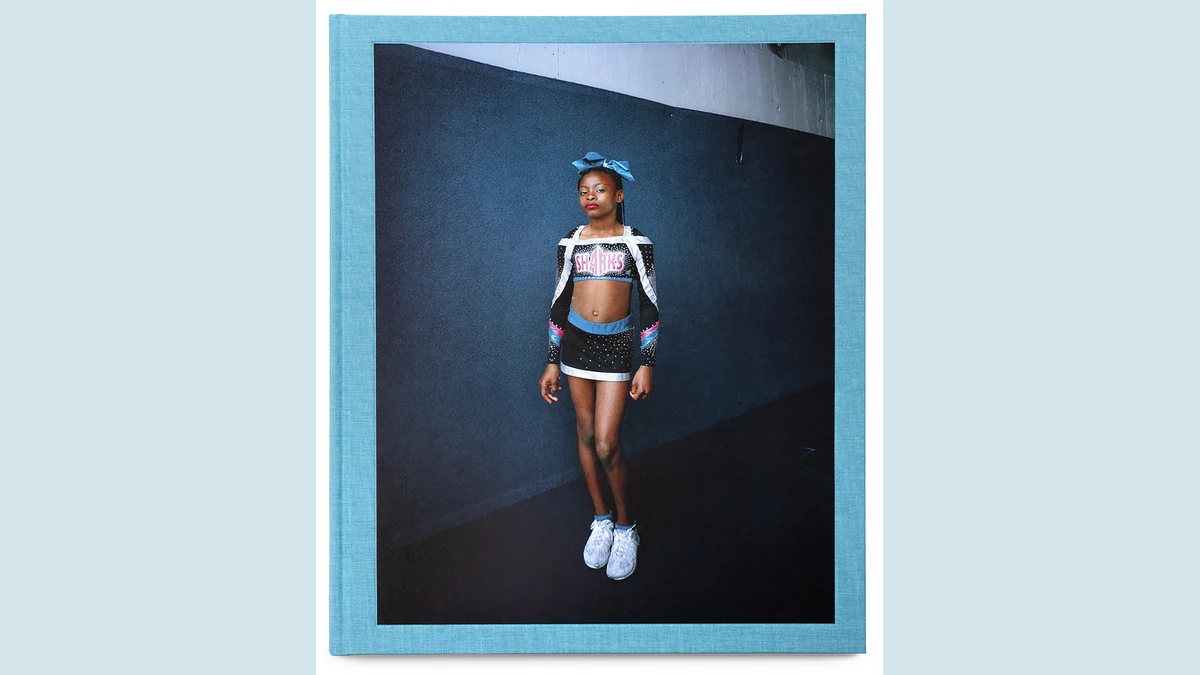
The portrait on the cover is of Jazmine, an 11-year-old cheerleader. Her uniform refers to a familiar American image, yet the photograph keeps her youth and individual presence visible. CNN reports that Verbeeck wanted to challenge the polished and often adult-coded version of cheerleaders she saw in popular culture. A young person in a recognizable role is allowed to remain a young person.
Listening is part of the photographic method
Publisher GOST Books describes the work as 54 images selected from a six-year, analogue-film project. The larger number of sittings and smaller book edit matter. The final sequence is a shaped argument about identity and representation, not a directory of everyone Verbeeck met. CNN reports that she spoke at length with participants about their interests and concerns. Those conversations are not reproduced in the book, but they informed the portraits.
This is a question of portrait photography as much as documentary practice. A photographer can choose a camera position, light, and final edit while still giving a subject meaningful control over how she appears. The collaboration does not erase authorship. It makes the relationship between photographer and sitter part of what a reader should understand about the result.
A connection to My Style. My World. My Story.
At Kisau Photography , my “My Style. My World. My Story.” framing starts from a related belief: style becomes more revealing when the person photographed can bring her own memories, place, and choices into the image. In the Akane interview, her account of Kagurazaka explains why two outfits on the same streets could express different chapters of her life. That is my own editorial and photographic practice, disclosed here as such. It is a thematic comparison, not a claim that the projects use the same method or serve the same participants.
Verbeeck’s young sitters, long national scope, and documentary book have distinct stakes. Her participants range from childhood to late adolescence, so inviting genuine participation and listening carefully are especially consequential. Kisau’s collaborations center on individuals telling their stories through fashion and portraiture. Across those differences, the useful question for a photographer is shared: which decisions can the sitter make, and how can the frame show the person’s world rather than a prewritten idea of who she should be?
America’s Girls does not replace one universal image of girlhood with another. It makes room for many self-presentations within a deliberately edited book. The result is most compelling where the viewer can see the person’s own choice within the photographer’s composition.
The book edit resists a single archetype
A six-year project across 28 states could easily turn its subjects into examples of a national type. Verbeeck’s method pushes in the other direction. The invitation to bring a personally significant object gives each participant a route into the frame. A cheer uniform may identify an activity, but the person wearing it still decides how to stand, look, and be seen. A bicycle or collection of rocks can carry a different account of growing up. The object’s value comes from the girl’s relationship to it, not its visual novelty.
The final 54 pictures are also a reminder that editing is an act of representation. A book cannot include every encounter, so its sequence determines which experiences sit beside each other and what a reader notices as a pattern. Verbeeck’s conversations may have informed that edit, but readers see photographs rather than full transcripts. The book should be read as a considered portrait of selected experiences, not a statistical description of every American girl. That distinction protects the specificity of each sitter.
Youth portraiture raises the standard for care
The subjects are minors or young adults. Their willingness to participate, their chosen objects, and the time taken to speak with them are central to the project’s ethical meaning. CNN reports that Verbeeck avoided casting strangers off the street and worked through communities where participants could choose to join. That approach does not settle every question about how young people’s images circulate after publication. It does show that consent and attention were part of the making, not merely administrative steps after the photograph.
The large-format process also slows a sitting. A deliberate camera setup can give the photographer time to talk and the sitter time to decide how she wants to appear. That matters in a visual culture where young women are often described through quick labels. The portrait is not an unmediated statement from the subject, since the photographer still chooses light, frame, and final image. It is a collaboration whose terms readers can examine.
Kisau’s “My Style. My World. My Story.” theme is valuable here as a question rather than a slogan imposed on Verbeeck’s work. What part of this image belongs to the subject’s choice? What part belongs to the photographer’s view? Where does the setting carry a personal history instead of standing in for a generic identity? Those questions help keep a person visible behind the category a headline might otherwise assign her. In America’s Girls, the strongest answer is the space Verbeeck gives each participant to appear as someone particular.