

The City Gives Each Portrait a Structure
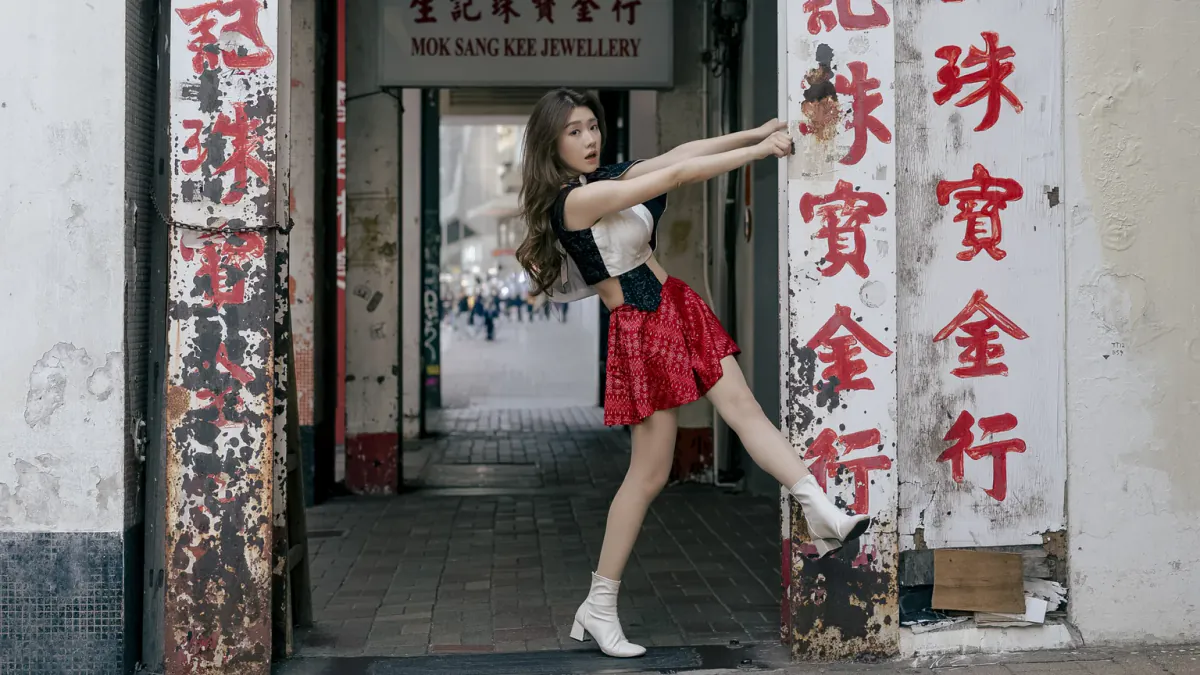
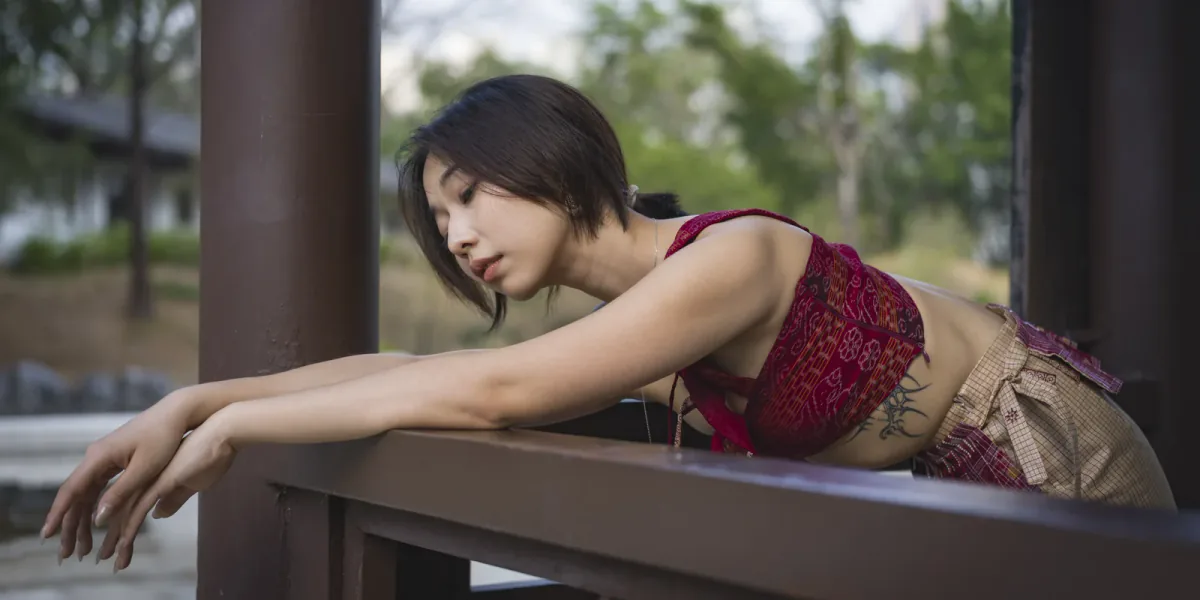
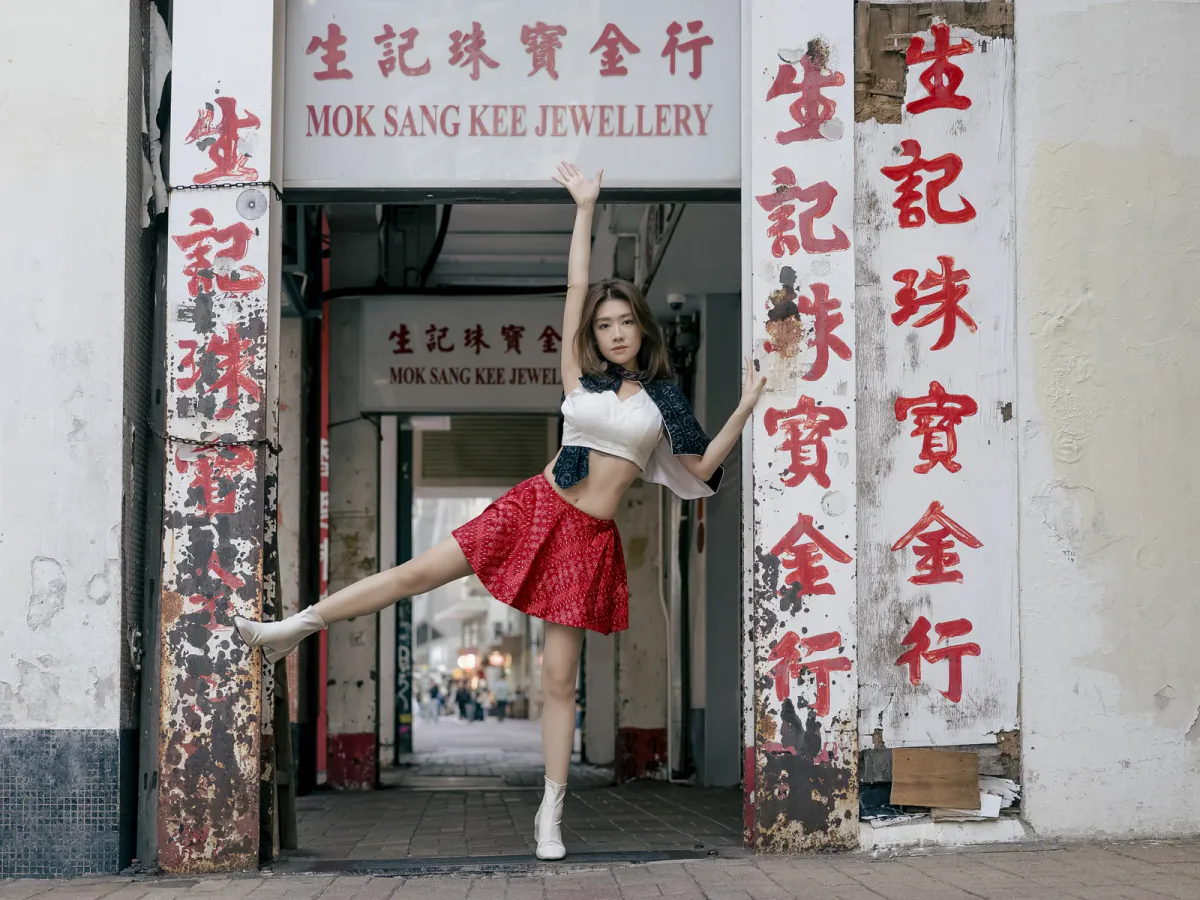
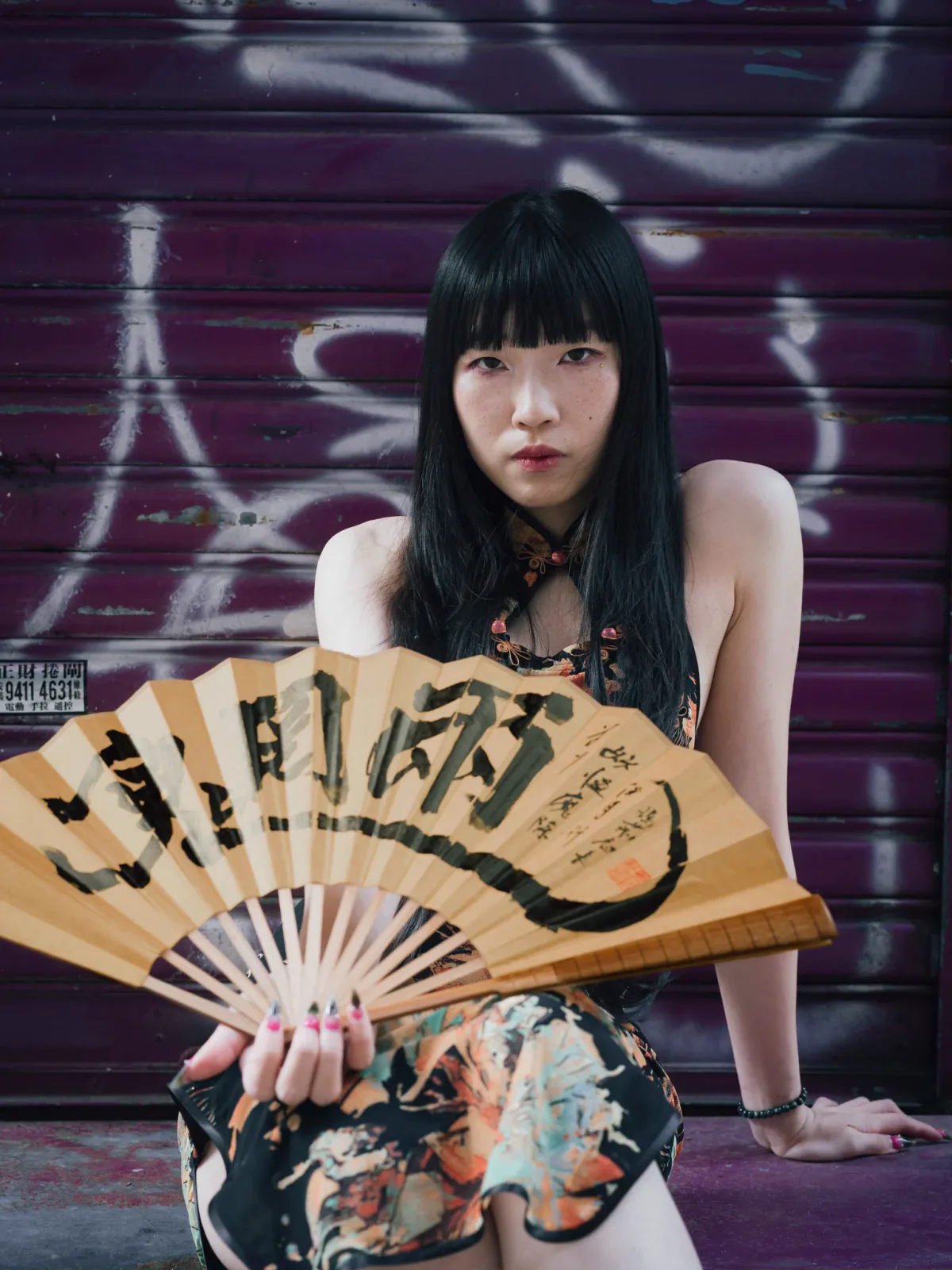
Across these eleven stories, Hong Kong contributes lines, surfaces, color, and depth to the portrait. A railing supports an extended pose. A shop entrance frames a lifted arm. A purple shutter sets off a painted fan. The relationship between person and place gives each photograph its particular character.
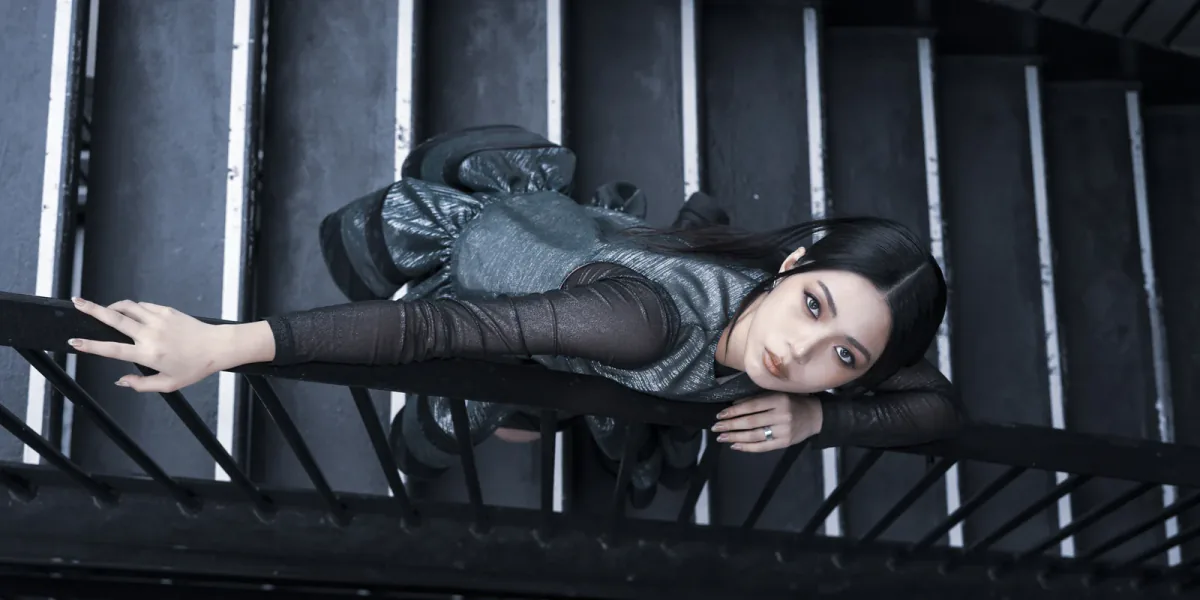
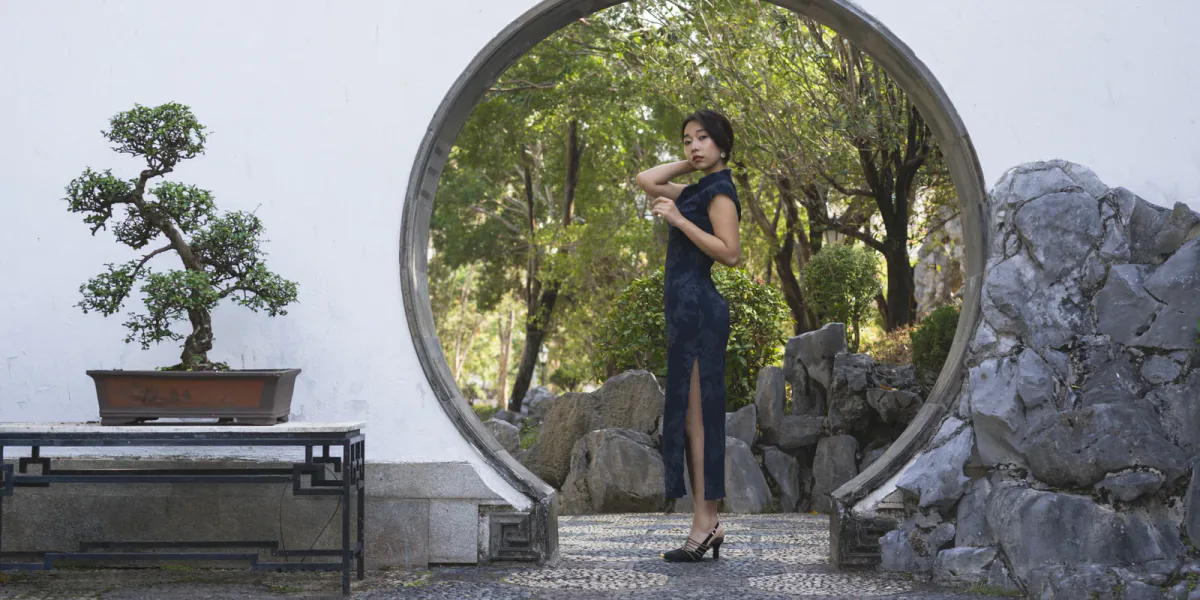
At Tai Kwun , the high viewpoint compresses Meko Cheung and the staircase into a study of dark fabric and repeating lines. In Kowloon Walled City Park , a rail follows Chow’s extended arms, while a circular opening gives her standing figure a frame within the frame. Architecture contributes directly to the composition.
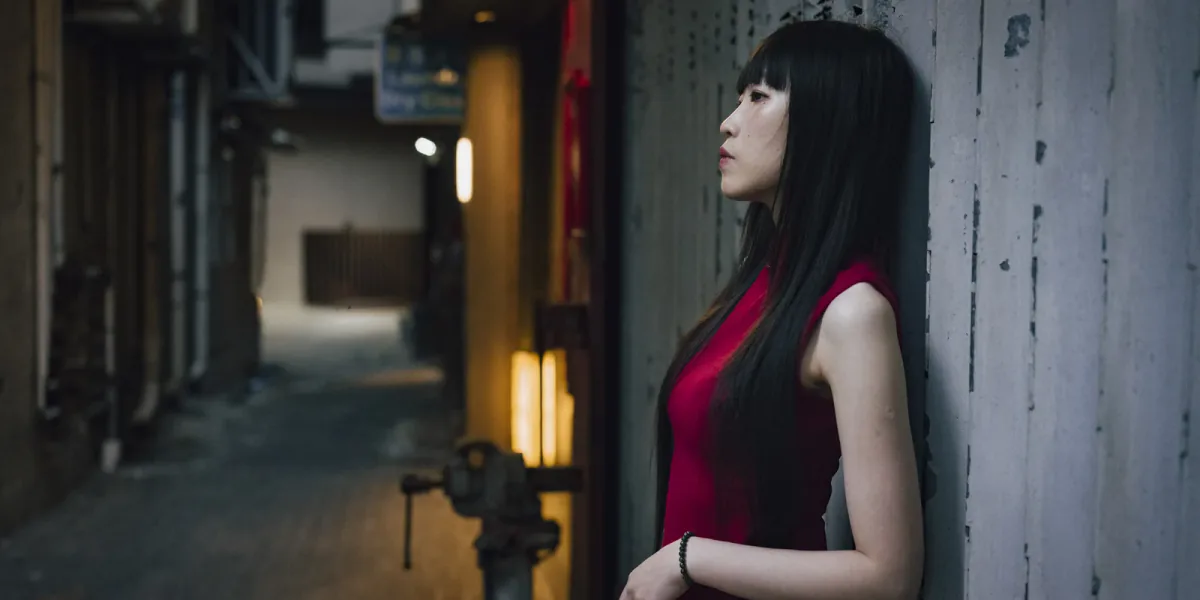
The street portraits change that relationship. Ivy Liu’s extended limbs echo the shopfront’s edges, while Merry Cheung’s fan introduces a broad curved shape against the shutter’s horizontal ridges. In a closer portrait of Ivy, soft foreground obstructions and shallow depth keep the city present without competing with her expression.
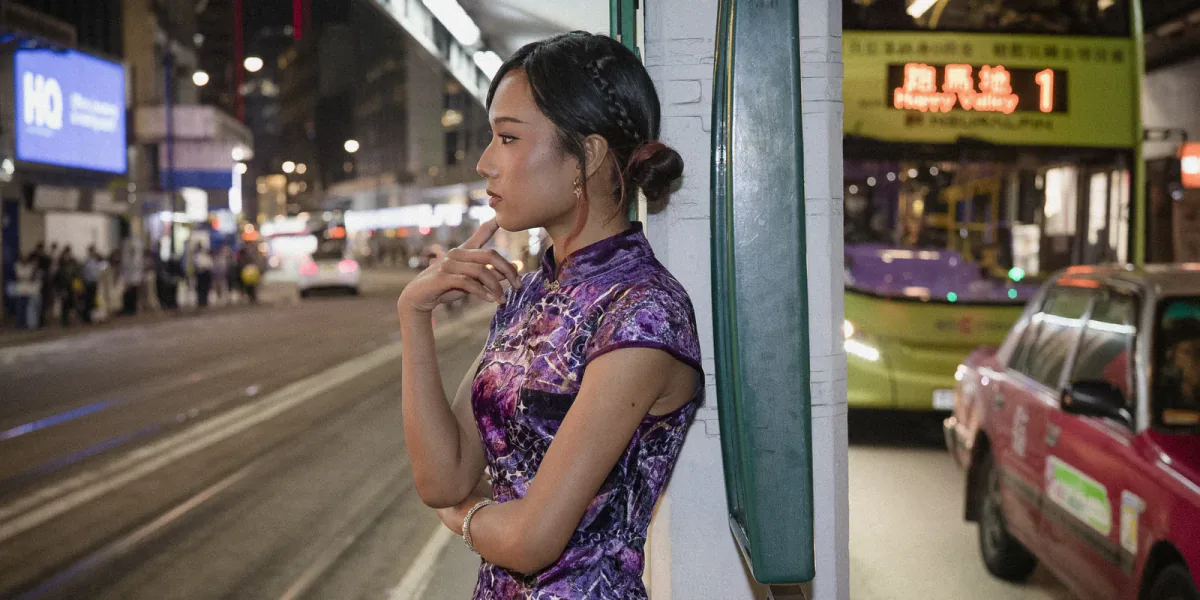
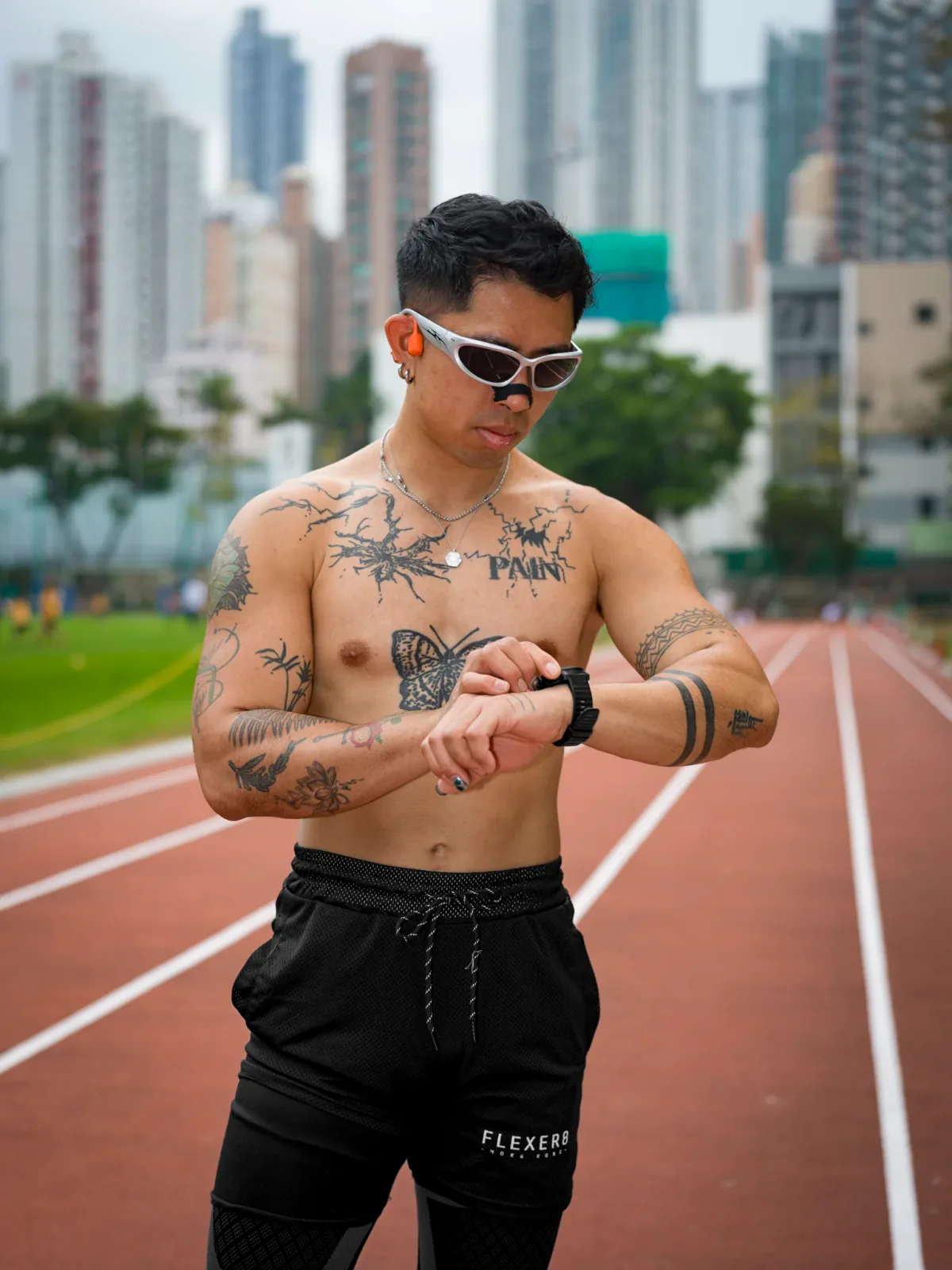
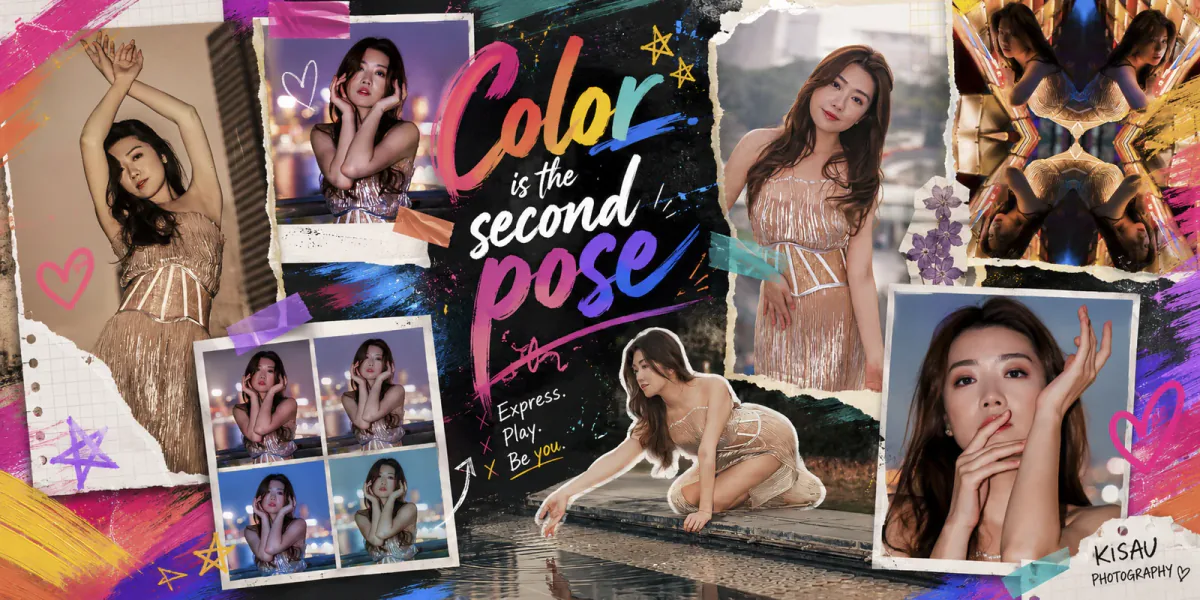
The sequence moves between such differences. Lia’s still profile gains energy from the traffic behind her. Michael’s glance at his watch gives the running-track portrait a specific action. Anna interrupts the repeated modules of a graphic wall. The closing collage of Ivy uses repetition, color, and layout to turn one rooftop story into several visual variations.
Seen together, the photographs make location an active part of portraiture. The useful question is what to retain in the frame. A distinctive surface, a line that meets a gesture, or a color that answers the clothing can make the connection clear without describing the entire place.
Explore the Eleven Stories
Each original editorial extends the photograph shown here with its own sequence and credits:
- Meko Cheung in Bach Mai, A Hong Kong Story
- Anna in Hong Kong After Dark
- Ivy Liu in Hong Kong: Rebellion, Truth, and Texture
- Lia in Hong Kong: Between Urban Edge and Timeless Tradition
- Ivy Liu in Hong Kong: A Story Told Through Personal Style
- Merry Cheung in Hong Kong: Culture, Color, and Quiet Power
- Merry Cheung Turns Calligraphy Into a Street Performance in Hong Kong
- Michael Brings FLEXER8 From Track to the Streets of Hong Kong
- International Spotlight: A Sarangi Design in Hong Kong
- Beauty Held in the Presence of History in Hong Kong
- Ivy Liu in Hong Kong: Color Is the Second Pose
Hong Kong Through Other Eyes
Hong Kong has sustained many distinct photographic interpretations. Fan Ho photographed everyday life in the city during the 1950s and 1960s, using black and white to give light, shadow, and passing figures a strong graphic presence.
Michael Wolf made density itself a subject. In Architecture of Density, he excluded sky and horizon to fill the frame with residential facades. The companion 100 x 100 series moved indoors, photographing residents and their belongings in small public-housing apartments. The two series connect an architectural pattern with the lives inside it.
Romain Jacquet-Lagrèze has explored the city through architecture, rooftops, signs, and changing light. His work extends the range of viewpoints through which Hong Kong can be read photographically.
These bodies of work offer different answers to the same compositional challenge: how to make a visually dense place specific within a single frame. In this portrait sequence, the answer begins with the person and the features of the city that give their presence shape.