On a runway, a denim jacket can reveal how its weight moves around the shoulders. In an exhibition, a viewer has longer to follow the seams. Those are general ways of reading the same material, and they explain the appeal of Hong Kong’s September mix of shows, displays and discussion.
The Hong Kong government's September 4 announcement marked the launch of Fashion Asia Hong Kong 2026 and the fifth Hong Kong Denim Festival. Hong Kong Design Centre’s programme combined a Fashion Challenges Forum with the 10 Asian Designers to Watch Exhibition, held at Peak Galleria from September 4 through 13.
Hong Kong Design Institute’s Denim Festival opened with the Denim Voyage Party at Central Plaza. The announcement described more than 30 creations from the institute’s talent programme and local and Korean brands. Exhibitions, workshops and forums also formed part of CENTRESTAGE at the Hong Kong Convention and Exhibition Centre.
The programmes gave the work different amounts of time. A moving look offers a sequence the audience follows together. A display lets someone return to a detail. A discussion can explain why the maker chose it. Each adds something another format may leave out.
Stay long enough to follow the seam
The 10 Asian Designers to Watch exhibition offered a slower encounter with emerging work. A visitor could stay with a line, compare volumes or move closer to a finish. The garment no longer had to reveal everything during a few seconds of movement.
A seam can change the direction of a surface. A fabric can hold a shape away from the body or fall close to it. Those relationships are useful to follow before a designer’s name becomes familiar. Close looking gives an unfamiliar piece time to establish its own interest.
The visitor can also choose the sequence. One construction detail may send them back to another piece. A similar silhouette in a different textile can reveal what the material is doing. Discovery becomes a route someone builds through the work, at a pace they can adjust.
A familiar fabric makes the change visible
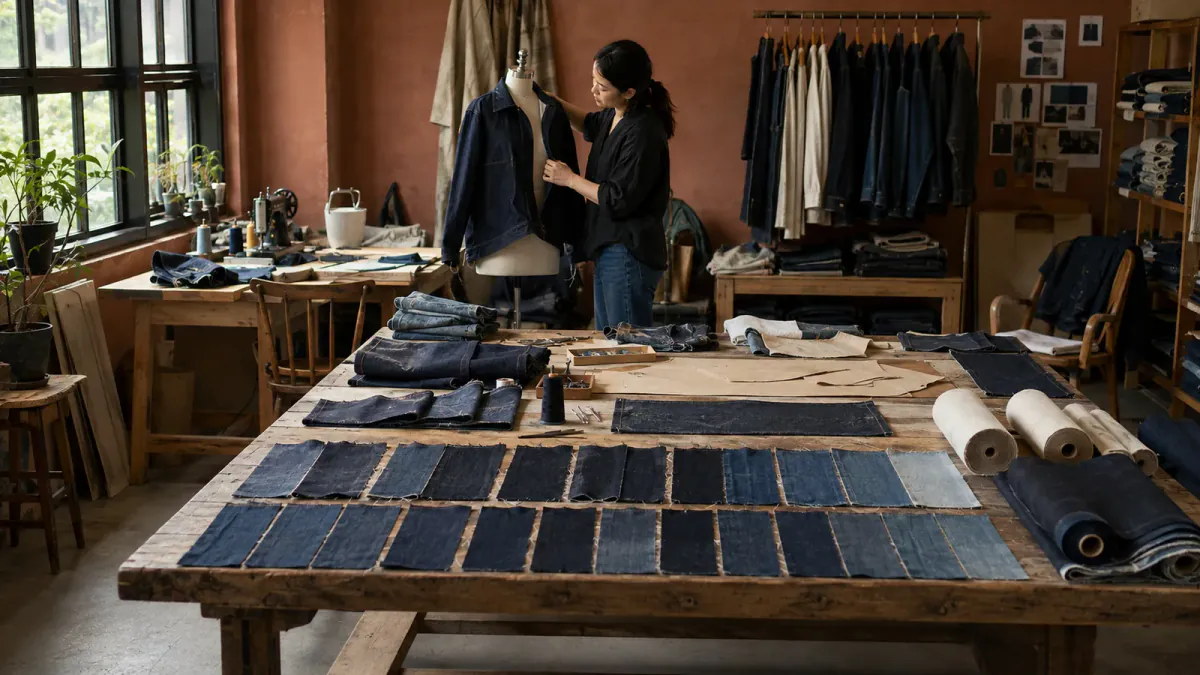
Denim brings a familiar set of visual clues: twill, topstitching, seams, wash and fading. Jeans and jackets give many viewers a reference they already know. A designer can change the scale or placement of those clues and let the difference become easy to read.
Compare the idea of a cropped jacket with an elongated one. The cloth may be familiar while the balance around the body changes. A closure, shoulder or broad panel can give the material another attitude. These are general design possibilities, rather than descriptions of unverified individual festival looks.
The Denim Voyage Party’s more than 30 creations gave that material-led programme a moving presentation. Exhibitions and workshops offered other views of the work. Distance can reveal the outline, while proximity can bring a join or a change in wash into focus.
Ask what the finished look leaves out
A finished garment leaves some questions unanswered. Why this textile? What changed between the first sample and the final piece? How could the design be made at another scale? A forum can bring those choices into the account, with the maker’s explanation beside what visitors have seen.
For an emerging label, a sample, production route, price and audience all affect what happens after a strong design idea. Discussion can connect them without asking the clothes to illustrate an entire business plan. It gives students and visitors a way to understand how a collection continues beyond its presentation.
The formats work best when they allow those different views. A workshop can expose a process. A runway can reveal movement. A display can reward a second look. A conversation can identify a constraint that shaped the result. Together, they give an audience more than one reason to stay curious.
Give the next encounter somewhere to begin
A public presentation puts the work within reach of people who might remember, discuss, commission or stock it. Which connection follows will depend on the collection and the encounter. The programmes created settings for that contact across educational, public and industry audiences.
Some next steps could be quiet. A visitor may ask for technical information, or a conversation may lead to a production meeting. A designer may learn which detail makes someone stop and look. These are possible forms of follow-through, rather than outcomes established by the opening announcement.
The range of entry points lets the same practice meet different interests. One person may arrive for denim, another for an unfamiliar designer and another for a discussion of production. The work can remain the point where those interests meet.
The Hong Kong Fashion Fest programme provides the wider event context. Our September fashion calendar places these programmes within the month’s international presentations. This article follows the September 2026 record rather than inviting readers to an exhibition that has ended.
The jacket’s moving outline and its close-up seam ask for different kinds of attention. Giving both a place lets an audience keep looking after the first impression. That is a useful opportunity for a designer whose most interesting decision may be the one a passing glance misses.