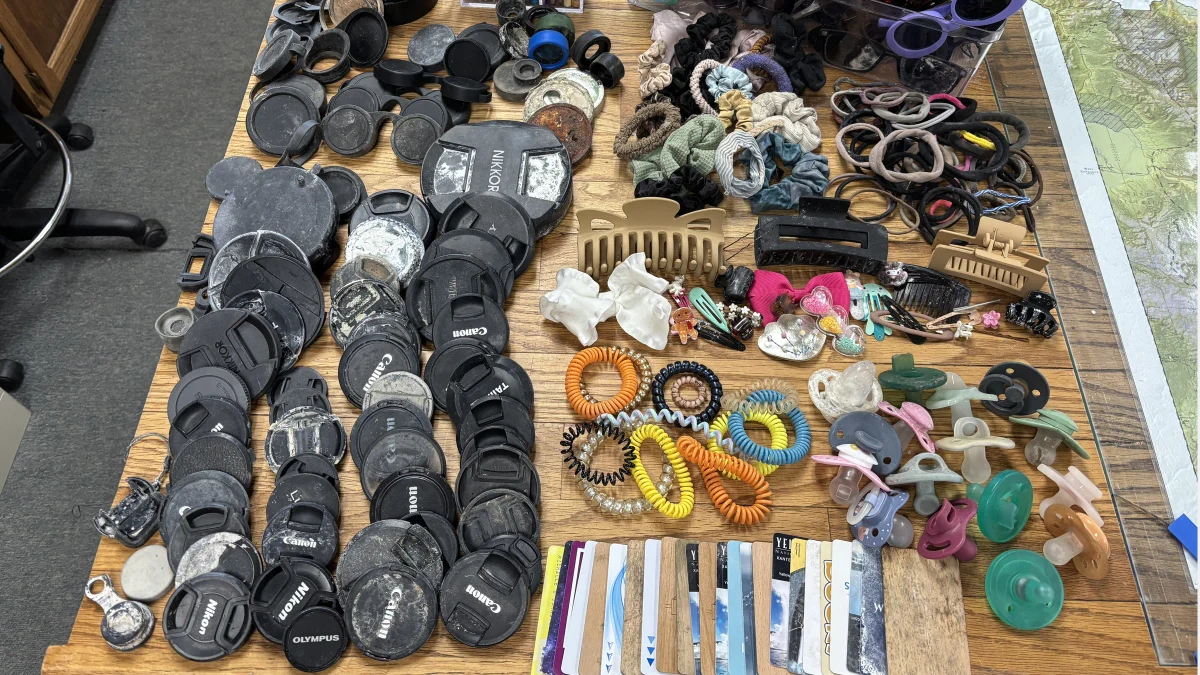
Yellowstone National Park's geology team has recovered 54 camera lens caps from hydrothermal areas this season. The number turns a small photography habit into a conservation story. A loose cap feels disposable in a camera bag. In a hot spring or geyser basin, it becomes another foreign object that staff must retrieve from a dangerous and sensitive environment.
The photography item at the top of the list
The count comes from a September 14 Yellowstone Volcano Observatory report written by National Park Service physical science technician Margery Price. As of early September, the park's geology team had removed more than 20,100 pieces of trash, 5,600 rocks and sticks, and over 280 hats from hydrothermal areas in 2026.
The Wikipedia overview of Yellowstone National Park supplies broad geographic and historical orientation. The current recovery counts, environmental effects, and safety guidance here come from United States government sources.
Among the frequently recovered personal items, camera lens caps led with 54. The team also collected 47 hair ties, 42 pencils, 36 pairs of sunglasses, 20 hotel key cards, and 17 pacifiers. DPReview identified the photography angle in its same-day coverage.
The featured photograph is Price's official National Park Service image of those recovered items. It shows lens caps from several camera brands grouped beside hair accessories, glasses, keys, and other objects. The credit is Margery Price, National Park Service, and the linked source is the official USGS report.
Accidental loss still has an impact
The park distinguishes between deliberate litter and objects lost by accident. A cap can slip from a hand, roll from a railing, or be carried by wind. Intent changes how we judge the visitor. It does not change what the object becomes once it enters a hydrothermal feature.
Yellowstone explains that foreign material can clog water supplies, block or divert runoff, and introduce chemicals or sediment. Retrieval is not a simple matter of stepping off the boardwalk. Thermal ground can be thin and unstable, water can be near boiling, and the park instructs visitors to stay on designated paths.
The National Park Service's page for Morning Glory Pool gives a longer historical example. Debris thrown or dropped into the pool became embedded around its sides and vent, reducing water circulation and lowering temperature. The change affected the organisms living there and altered the pool's colour.
A single lens cap is not responsible for that history. Fifty-four caps, however, reveal a repeatable failure in how photographers handle loose equipment near a constrained viewing space.
The risky moment happens between frames
Photographers tend to think about camera safety while shooting. The more vulnerable moment can arrive just before the first frame, when a cap is removed while attention shifts to exposure, composition, family members, crowds, or changing light.
Boardwalks make that transition unusually unforgiving. There may be no safe place to set an object down. Rails invite temporary placement, but wind, vibration, and another visitor's movement can turn temporary into lost. Pockets may be shallow. A cap balanced on the camera bag can vanish while the photographer raises the camera.
The lesson is simple: give the cap a destination before removing it. Use a zipped pocket, a specific compartment, or the same secure place every time. If a tether is used, make sure it cannot swing into controls or snag on a rail. The best method is the one that becomes automatic and keeps every loose item attached to the photographer or inside a closed bag.
This is less about buying an accessory than designing a field routine. No product link is needed to act on it.
Do not turn recovery into another hazard
If gear falls beyond a boardwalk, leave it and tell park staff. The National Park Service says visitors should stay on boardwalks and trails in thermal areas. Its thermal-basin safety guidance warns that the ground can be a thin crust above scalding water.
A lost cap is replaceable. A step onto unstable ground can become a medical emergency or a fatal one. Trying to recover an inexpensive object also creates a second problem for rangers, who may need to manage both the item and a visitor in danger.
The same principle applies to dropped phones, filters, batteries, and memory-card cases. The cost or importance of the object does not make the ground safer. Report the location as precisely as possible and let trained staff decide what can be recovered.
Small gear deserves a packing system
The official count suggests three practical checks for photographers visiting Yellowstone or any protected landscape.
First, reduce loose parts before reaching the viewpoint. Remove an unneeded strap clip in the car, secure filter cases, and decide where the lens cap will go. Second, close the bag after every change. An open zip creates more opportunities for wind or a bump to scatter small items. Third, count equipment when leaving, including the pieces that rarely appear on a packing list.
That discipline extends beyond thermal areas. Beaches, cliffs, wetlands, and historic sites all collect the objects visitors assume they will retrieve later. A photographer's responsibility does not end at the edge of the frame.
For a broader practice built around waiting and deliberate observation, Newsroom's street-photography guide makes a related point: good photographs often come from slowing down enough to notice what the scene requires. In Yellowstone, the scene requires attention to the ground, the wind, the boardwalk, and the objects in your hands.
The picture is evidence, not a curiosity cabinet
The recovered-items photograph is visually compelling because it organizes a season's accidents into recognizable groups. Brand names on the lens caps make the photography connection immediate. The coloured hair ties and pacifiers make the table almost playful.
But the image is not merely a collection of oddities. It is evidence of repeated visitor behaviour and repeated staff work. Every object in the frame had to be found, assessed, and removed from a landscape where normal cleanup can be dangerous.
The number 54 is memorable because lens caps are ordinary. That is also why it matters. Conservation failures are not always dramatic acts. Sometimes they begin with a familiar gesture, a distracted hand, and a small piece of plastic with no secure place to go.