Put a camera beneath a domed ceiling and imagine two pictures. One gathers the surrounding architecture inside a complete circle. The other lets it reach the corners of a rectangle. The difference begins at the edge, but it changes how everything within that edge has to be arranged.
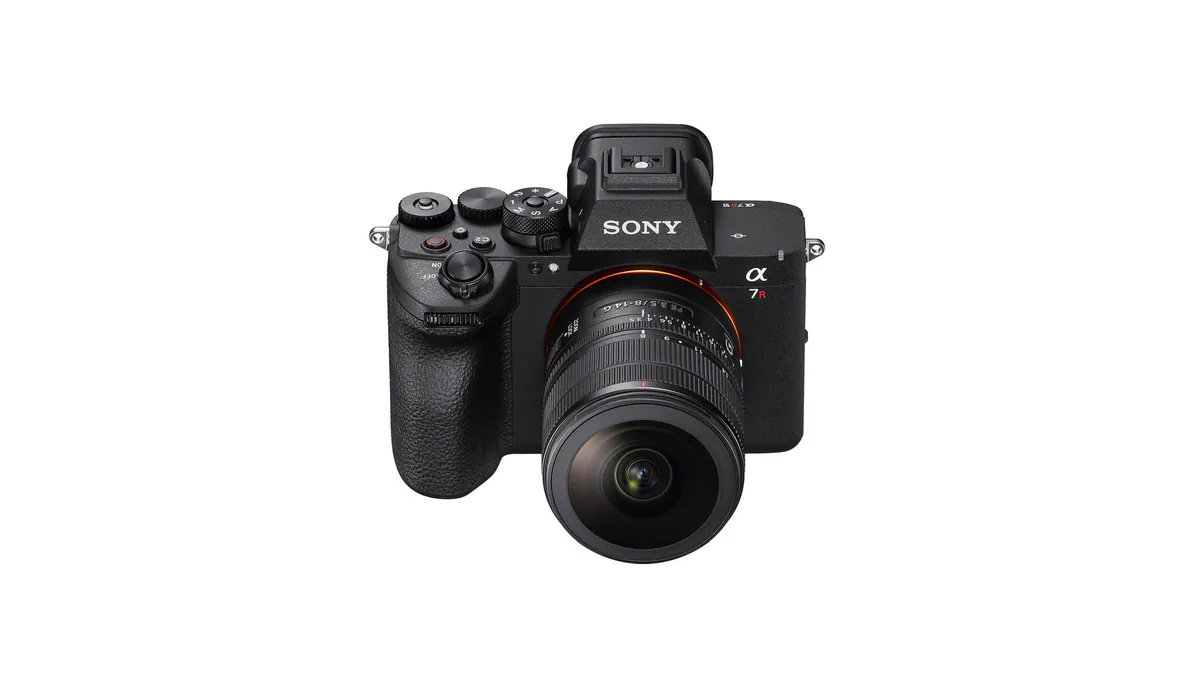
Sony’s FE 8–14mm F3.5 Fisheye G offers those two endpoints on a full-frame camera. At 8mm, the image is circular. At 14mm, it fills the rectangle. Both give a 180-degree view, measured across the circle at one end and diagonally across the frame at the other. The shape of the picture becomes part of the focal-length choice.
Sony’s September announcement gave a US suggested price of $1,599.99 and October 2026 availability. The full-frame E-mount lens uses a constant f/3.5 aperture. This first look follows the framing choices that the specification makes available, with the announcement’s price and schedule kept as launch context.
In the imagined hall, a person beneath the dome could give the architecture a scale reference. The circle might make the space feel enclosing. The rectangle could let the same roof lead toward the page edges. Neither boundary composes the picture for you. Each gives the person and the surrounding structure different space to occupy.
Give the curve a direction to follow
A fisheye projection maps a broad field of view differently from a rectilinear wide-angle lens. Lines away from the image center can curve strongly. Those curves are part of its visual language, giving roofs, railings, avenues, and the horizon a different relationship to the subject.
A centered dome may suit the circular boundary particularly clearly. Move the person off-center and the balance changes. At the frame-filling endpoint, examine what the corners add: another structural line, more floor or a distraction that was outside the circle. The comparison is about the arrangement of information as well as how wide the view feels.
Lower the camera and paving or equipment can grow in the foreground. Raise it and the roof occupies a different proportion of the frame. Watch where the curves lead after each move. One arc may carry attention toward the subject, while several equally strong ones send it in different directions.
Give the main action a clear place. An athlete’s stance can remain the reason for a sports portrait even when the venue surrounds it. A building may become easier to read through one repeated structural line than through a frame crowded with every available detail. The lens includes a great deal, leaving the photographer to decide what should lead.
A wheel can introduce the rider behind it
Sony specifies a 0.15m minimum focusing distance and 0.22x maximum magnification at 14mm. Those figures invite compositions that combine a prominent nearby element with the surrounding setting. The announced weight is 314g, and the internal zoom keeps the lens from extending as focal length changes.
Choose a nearby object for its relationship to the subject. A bicycle wheel can introduce the rider behind it. A ledge can begin a route toward a building. Move closer or farther away until its size serves that relationship. A foreground object that is merely large can leave the person looking like an afterthought.
Check people near the edges with particular care. A face can become visually secondary or awkwardly stretched within a composition that otherwise feels energetic. Moving the camera, asking for a small change in position, or simplifying the background may resolve the problem more effectively than planning a heavy crop later.
Then follow the entire boundary. A camera bag or bright patch of sky can acquire a surprising amount of presence in a broad view. With the circular image, inspect the full circumference. With the rectangle, check all four corners. A small movement before exposure may remove something that would cost much more of the picture to crop later.
Keep the circle when the picture reaches the page
A circular image needs a final setting that lets it remain circular. On a book page, the surrounding blank area can become part of the presentation. A rectangular website crop may cut away the boundary that motivated the shot. Thinking about the page early protects a choice made at the camera.
Sketch both shapes within the same page area. Give each a caption and a neighboring photograph. The exercise can reveal whether the circle needs more room or whether the rectangular image connects more naturally with the sequence. Layout becomes a way to compare the photographs, rather than a final container imposed on them.
Correction introduces another choice. Converting fisheye geometry toward a rectilinear view redistributes pixels and changes the usable boundaries. Our guide to correcting fisheye distortion while preserving the composition explores that editing decision. Leave room around important details when a corrected version is part of the brief, and evaluate the actual crop before committing to the layout.
Keeping the curve and correcting it are both available decisions. Choose through the intended photograph: the lines you want to follow, the person’s shape and the details that need to survive the final crop. Straightness alone does not tell you whether the picture has improved.
Change one part of the arrangement at a time
A small comparison can make the options easier to read. Use one scene from the same position at both endpoints, then change camera height and make a closer foreground arrangement. Keep enough consistency to see what each change did. This is a proposed exercise, rather than a report of testing the lens.
At the likely display size, look first at the person or main subject, the foreground and the boundary. Then inspect focus, flare and edge detail for the assignment you have in mind. A technically sharp image can still give too much space to the wrong object. Those judgments deserve separate attention.
A fixed lens, such as the one in our 7Artisans autofocus fisheye first look, starts with one framing approach. Sony’s FE 8–14mm product page describes the span between two. Return to the imagined dome: the subject has not moved, but the way the room meets the picture’s edge can change around them.