Nikon has given its new Z5IIC a clear job: make a full-frame camera feel approachable to people who have not learned every exposure setting. Mashable's launch headline captures that beginner-friendly pitch. At almost the same moment, a photographer's critique of Nikon's hybrid bodies asks for a camera that concentrates on still photographs. A separate industry ranking reported by RedShark puts Fujifilm ahead of Nikon in 2025 digital camera shipments. Together, the three stories raise a question about whom Nikon is designing for. The shipment table alone cannot answer it.
The Z5IIC lowers the entry barrier
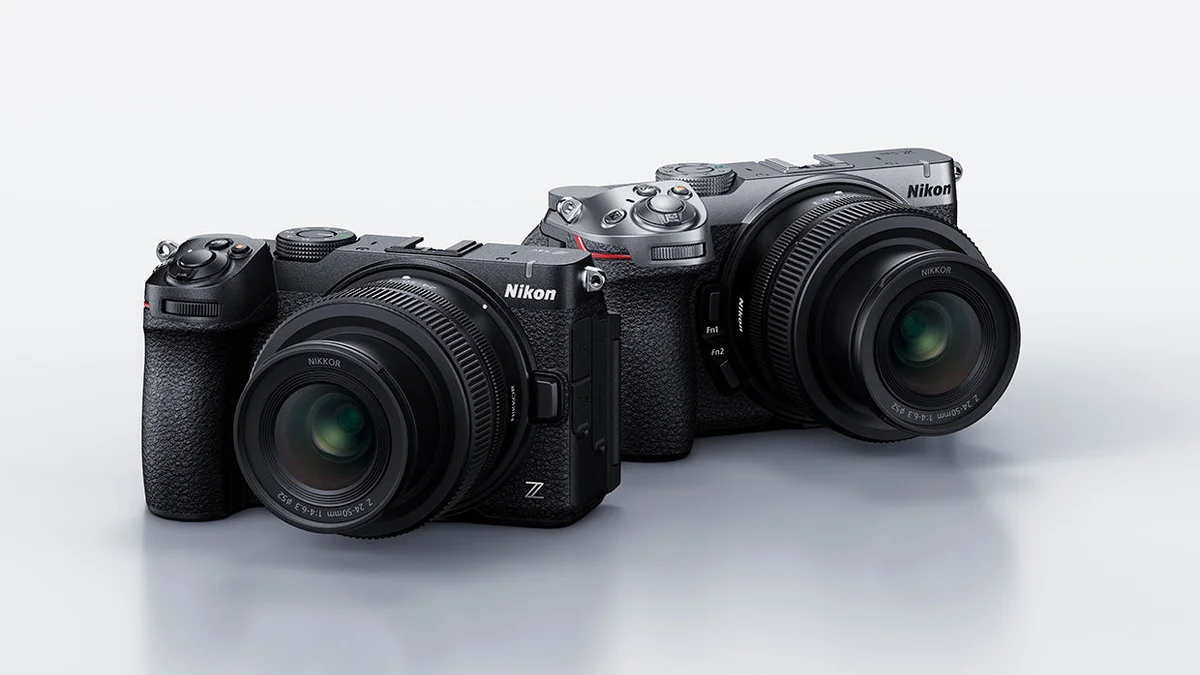
Nikon's September 24 announcement presents the Z5IIC as a full-frame Z-mount camera for first-time users. It borrows the Z5II's processing platform but changes the experience around it. Fifteen scene modes on the dial adjust more than six settings for subjects such as portraits, pets, food and night landscapes. A dedicated button recalls Imaging Recipes, Nikon's downloadable looks, while automatic subject detection and stabilization reduce the number of technical decisions before a picture can be made.
That design is more substantial than a simplified menu. A beginner can choose a subject or look before understanding the relationship between shutter speed, aperture and ISO. Nikon also adds a camera simulation and themed photography lessons to SnapBridge. Those learning tools could make the automatic starting point a route toward deliberate control rather than a permanent substitute for it. The official Z5IIC product page lists a 24.5-megapixel full-frame sensor, 3.2-inch vari-angle monitor, in-body stabilization and Z-mount lens compatibility.
The body is designed around monitor-based shooting. It has a flat top and no built-in electronic viewfinder, a meaningful choice for photographers who prefer to brace a camera at eye level or work in bright light. Its full video toolkit, including cropped 4K at up to 60 frames per second and streaming support, also makes clear that accessibility does not mean a stills-only brief. Nikon is trying to make one camera welcoming to a new photographer while keeping room for video and more advanced work.
The question is what happens after the first few weeks. Scene modes may get a newcomer to a successful frame quickly, but their long-term value depends on whether the photographer can move easily from a preset to a chosen shutter speed, aperture or color treatment. Our earlier [guide to choosing camera modes](/news/photography/camera-modes-choice/) makes that progression practical: protect the setting that matters to the picture, then let automation handle the rest. Nikon's simpler entry point is most persuasive when it leaves that decision available.
A photographer asks for a different kind of simplicity
Simon Burn's Fstoppers essay , published September 24, is an argument about attention and physical handling. Burn praises Nikon's cameras and points to the Z f as evidence that the company understands the appeal of dedicated dials. He still wants a modern Nikon body designed primarily for still photography, with a straightforward screen and viewfinder arrangement and without an extensive video feature set. His proposal is a preference, not evidence that every working photographer wants the same camera.
The Z5IIC and Burn's imagined camera share a desire to remove friction, but they locate it in different places. Nikon makes the first decision easier through scene recognition, recipes and a touch monitor. Burn wants fewer competing functions around the act of setting exposure and framing through a camera. Neither approach is inherently more photographic. A mirrorless camera can provide both screen and eye-level composition, but a maker's choice of controls determines how that flexibility feels in use.
This is a design question that specifications cannot settle. A person moving from a phone may welcome a large touch screen and an automatic mode that makes an unfamiliar lens system less daunting. Someone who learned on a Nikon F may value a fixed screen, a viewfinder and a small number of controls that stay in the same place. Even among professionals, video can be a routine part of an assignment. Burn's essay is strongest as a request for another choice in Nikon's lineup, not as a verdict on the photographers the Z5IIC is meant to serve.
The market ranking needs its full denominator
RedShark reports that the Nikkei Industry Map 2027 places Fujifilm third among the Japanese camera makers it surveys for 2025 digital camera shipments. Its reported figures are 1.16 million Fujifilm cameras, or 11.8 percent, against 880,000 Nikon cameras, or 8.9 percent. Nikon's reported unit shipments fell from 960,000 in 2024, while Fujifilm's rose from 740,000. These are shipments of digital cameras across categories, not a measurement of revenue, profit, lens-system loyalty or the reception of a camera announced in September 2026.
That distinction becomes sharper when the product categories are separated. PetaPixel's account of a second Japanese industry table says Nikon produced about 860,000 interchangeable-lens mirrorless cameras in 2025, compared with about 750,000 for Fujifilm. Production is not the same measure as shipments, and the tables cover different product sets. The narrower comparison does not erase Fujifilm's overall shipment gain. It does show why the broad fourth-place headline cannot be read as Nikon losing the mirrorless contest that the Z5IIC enters.
Fujifilm's camera lineup is also relevant to the breadth of that first measure. Its digital business includes models with very different roles from a full-frame interchangeable-lens Nikon. Our recent [Instax Pal 2 report](/news/photography/fujifilm-instax-pal-2-framing-redesign/) shows one way Fujifilm courts people who want a playful route into making pictures. The comparison is about the range of products being counted, not proof that one company's design choices caused the other company's ranking.
Nikon's next test is therefore more specific than reclaiming a place in a table. The Z5IIC has to make its promise of easy entry hold up in actual use, while Nikon decides whether a stills-focused alternative of the kind Burn describes deserves its own place beside hybrid bodies. Readers comparing the current Nikon system can browse the Nikon Store on Amazon (paid link). The most revealing evidence will come from photographers using these cameras, and from future category-specific figures that show which products people actually choose.