A photographic light has two sizes that matter: the space it occupies in a bag and the surface it presents to a subject. Maven’s Talon series makes that distinction its central design idea. Three arms fold inward for transport, then open into a broader light source for use near the camera.
PetaPixel’s October 5 report introduces the line as Maven’s expansion beyond filters. Maven’s official Talon presentation identifies Mini, Pro, and Max models, with an October 13 Kickstarter launch. The practical question is how the unfolded surface changes the relationship between camera, light, and subject.
The unfolded size does the photographic work
Softness comes from the apparent size of a light source as seen from the subject. A broad source occupies more of that view, so shadows receive light from a wider range of directions. A compact source at a distance occupies less of it. The distinction between hard and soft light helps explain why folding is more than a packing feature.
Talon’s arms form an open, roughly Y-shaped arrangement. Maven says the layout can straddle a lens, letting the light approach the subject without placing a solid panel directly across the camera’s view. The design changes where a larger emitting surface can sit, rather than changing the basic relationship between source size and distance.
The useful comparison is between folded and operating geometry. The bag contains a compact object. The subject sees the opened arrangement. A small travel footprint therefore does not automatically imply a small light source once it is in use.
That distinction also prevents an overly broad conclusion about every photograph. A close portrait and a wider scene place different demands on a light. Moving the subject farther away reduces the source’s apparent size. Opening the arms cannot make the same lighting pattern remain unchanged at every working distance.
Position remains a creative decision
A light around the lens places illumination close to the camera’s viewing direction. A light moved to one side creates a different relationship between the visible face and its shadows. Both arrangements can be useful, but they give the portrait different structure.
The folded design makes a particular placement easier to consider. It does not make placement unnecessary. Before choosing a light, picture the intended frame. A close head-and-shoulders view may allow the opened source to remain near the subject. A full-length picture requires more space and asks the light to cover a larger area.
Maven’s presentation emphasizes getting close. The company also invokes the inverse-square relationship between distance and illumination. That familiar fourfold change when distance is halved describes a point-source approximation. An extended source used very close to a subject has more complex geometry, so the slogan should not be treated as an exact exposure rule for every Talon arrangement.
The practical photographic point survives that distinction. Distance affects both the amount of light reaching the subject and the source’s apparent size. It can also change how quickly illumination falls away across a scene. Those effects belong to the lighting arrangement as a whole, not to a universal product setting.
Three models answer different priorities
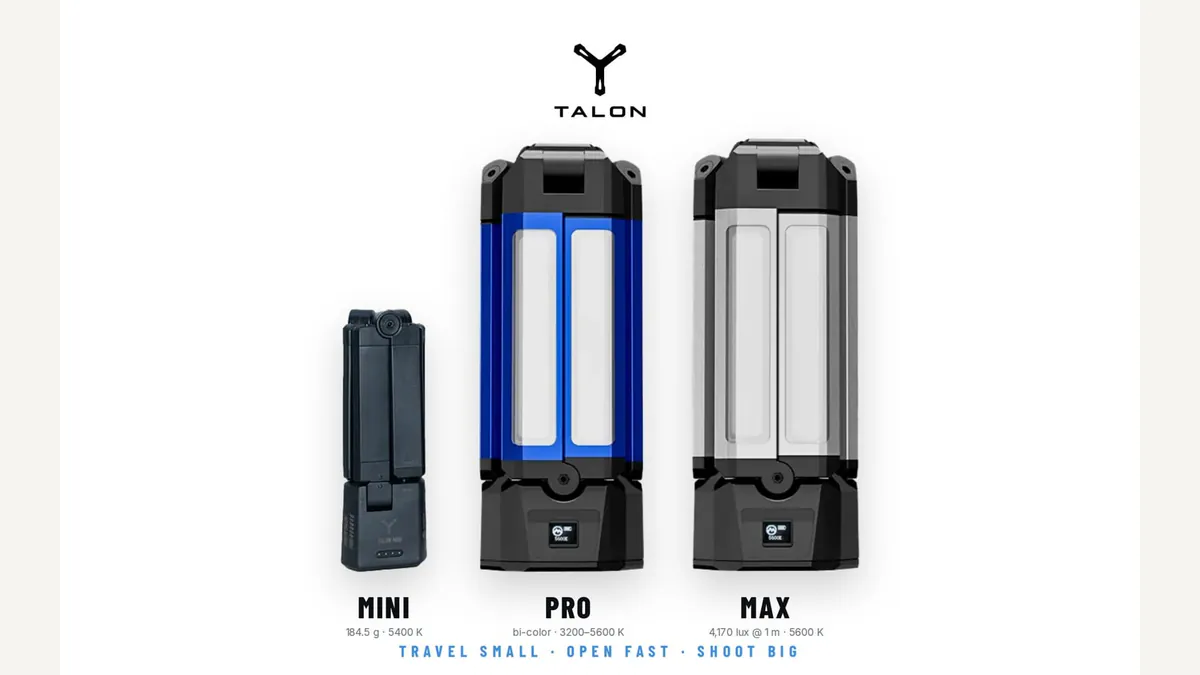
Maven’s product overview lists the Mini at 178 grams, with a 5400K output and approximately 470 square centimeters of opened light surface. The Pro offers adjustable colour temperature from 3200K to 5600K. The Max is a daylight model specified at 5600K.
The manufacturer lists 2,100 lux at one meter for the Pro and 4,200 lux at one meter for the Max. Those are manufacturer specifications, not measurements from this first look. They describe a difference in the stated output under the listed distance, while the Mini’s emphasis is its smaller carrying weight.
Colour-temperature adjustment serves a different purpose from higher output. A variable setting can help bring a source closer to the colour of the surrounding illumination. More output can change the available exposure or working distance. Neither specification alone establishes colour fidelity, shadow quality, or how a particular scene will look.
That makes the model names less useful than the intended task. The relevant distinction may be carrying size, adjustable colour temperature, or stated daylight output. A photographer who knows which constraint dominates can read the lineup without assuming the largest model is automatically the best fit.
A compact source still belongs to a complete setup
Continuous illumination lets the photographer see the lighting arrangement before exposure. It also makes shutter speed, subject movement, and available output part of the same decision. A still portrait and a moving subject may need different exposure choices even when the source remains in the same place.
The Newsroom’s comparison of flash and continuous portrait lighting explains that broader relationship. Talon adds a packing and placement idea to it. The opened arms are the feature to examine, while the photograph still depends on distance, direction, and the amount of light reaching the subject.
The October 13 campaign is a future launch, rather than evidence of a completed retail delivery. The official page should supply the current campaign details when it opens. For now, the line’s most useful promise is specific: carry a compact folded fixture, then open a larger emitting surface where the camera and subject can use it.