What Starman Optical brings to GoPro
GoPro’s proposed combination with Starman Optical places two different uses of light inside one business: making pictures and moving data. For photographers and filmmakers, the central issue is how the familiar camera system develops within that broader company.
GoPro’s September 1 announcement describes Starman as a privately held US optical-photonics business. Its transceivers would extend the combined company into AI infrastructure, alongside ambitions in government, defense, robotics, and aerospace. GoPro says it will continue supporting consumer products, subscriptions, and cloud services.
That would give the company two distinct relationships with images and information. One begins with a person choosing a viewpoint and recording a scene. The other serves the infrastructure through which large quantities of data travel. Understanding that distinction makes the agreement easier to read from a photographer’s perspective.
For a closer account of the partner's products and manufacturing plans, read our Starman Optical company explainer.
How the transaction is structured
The announced terms provide an aggregate cash payment of $285 million to GoPro shareholders, equivalent to $1.14 per share before a possible working-capital adjustment. Existing shareholders would retain approximately 10 percent of the combined company. About $92 million of outstanding GoPro debt would be repaid at closing.
Both boards have approved the agreement. GoPro expects closing by the end of 2026, subject to regulatory review, shareholder approval, and customary conditions. The combined company would remain publicly listed on Nasdaq.
The proposed structure is a recapitalization as well as a combination of businesses. It changes ownership and the financial setting in which future camera development would take place. For image-makers, the significance lies in the resources and priorities that eventually reach products and services.
Digital Camera World’s coverage highlights the unusual shift toward AI data centers. Its account places that move alongside GoPro’s financial pressures and its continuing consumer-camera operation. The camera business would become one part of a wider optical and imaging portfolio.
Two kinds of optical work
An optical transceiver sends and receives information using light. In a fiber connection, electrical and optical signals are converted at each end of the link. Its purpose is reliable communication.
A camera has a different task. The lens forms an image, the sensor records it, and the processing system turns that capture into a usable photograph or video file. An action camera adds demanding physical constraints: heat, battery capacity, water resistance, stabilization, sound, and the placement of controls on a compact body.
Both fields draw on optical engineering and electronics. Their products answer different questions. A faster data link is valuable because of the information it can carry. A better camera is valuable because of the pictures it enables and the confidence with which it records them.
The proposed combination therefore matters on two levels. It could provide a different financial foundation for camera work, while creating opportunities for engineering knowledge to move between teams. The most useful evidence of that exchange would be visible in specific designs, manufacturing improvements, or services that make shooting and editing easier.
The camera is part of a working system
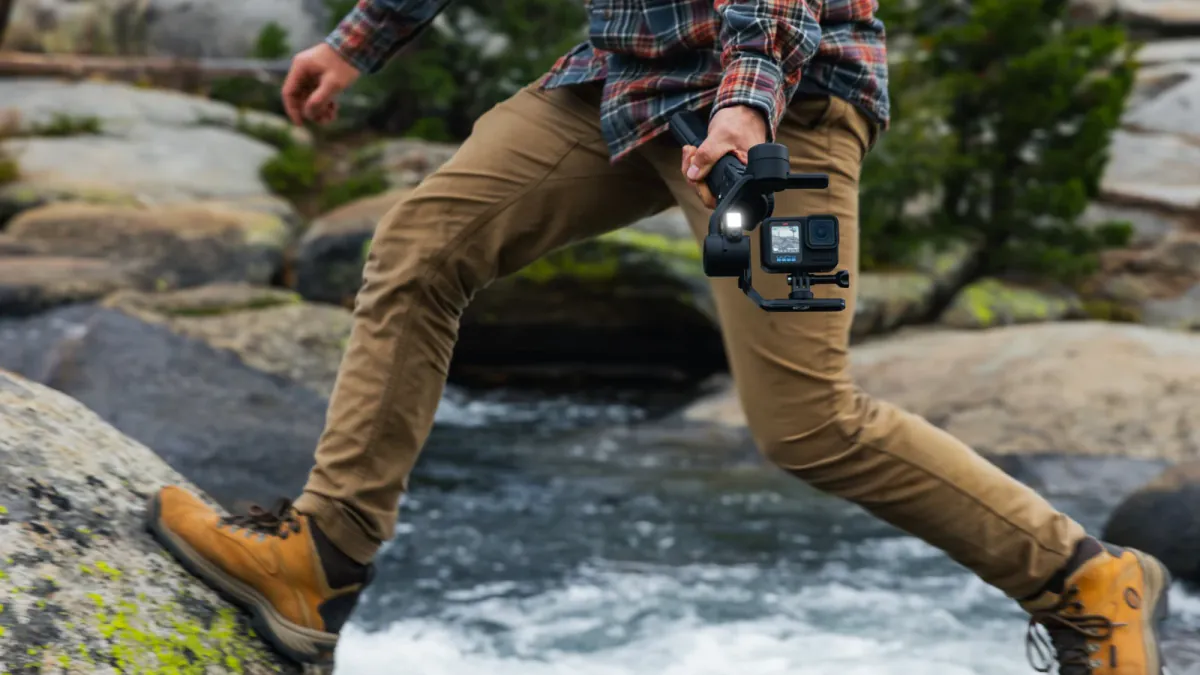
For a creator, an action camera often occupies a precise place in a sequence. It may supply a rider’s viewpoint, a low angle close to moving water, or a compact second view that can be cut against footage from a larger camera. The value of that position extends beyond the camera body.
Mounts determine where the view can be placed. Batteries and media determine how long a session can continue. An application can handle control, transfer, and quick review. Editing tools determine how readily the resulting material joins the rest of a project. When those parts work together, the photographer or filmmaker can concentrate on the scene.
Readers exploring the consumer-camera and accessory family can browse the GoPro Store on Amazon .
This is why continued support deserves as much attention as the next launch. A firmware improvement can resolve a recurring shooting problem. Dependable transfer can shorten the interval between capture and selection. Access to an existing archive can remain important long after the camera that recorded it has been replaced.
Newsroom’s drone preflight routine approaches another specialized imaging system in the same way: the photograph depends on the complete working chain. With GoPro, that chain includes the services and accessories surrounding the recording device.
Where the photography story develops next
The practical measures of the combined company would be familiar to anyone who relies on a camera system. Regular support, clear compatibility information, durable accessories, and well-resolved new products all make a difference to the work. So does an understandable account of where consumer imaging sits within the larger business.
A broad portfolio can give a company more than one source of growth. It also requires distinct products and customers to receive appropriate attention. Camera users need engineering that improves capture and a service structure that supports their existing investment in equipment and footage.
GoPro’s proposed merger changes the setting for those decisions. Starman brings a photonics business aimed at infrastructure, while GoPro brings a camera system with a recognizable role in visual storytelling. For photographers and filmmakers, the enduring question is concrete: how will the company help them place a camera, record reliably, and turn that viewpoint into a finished piece of work?