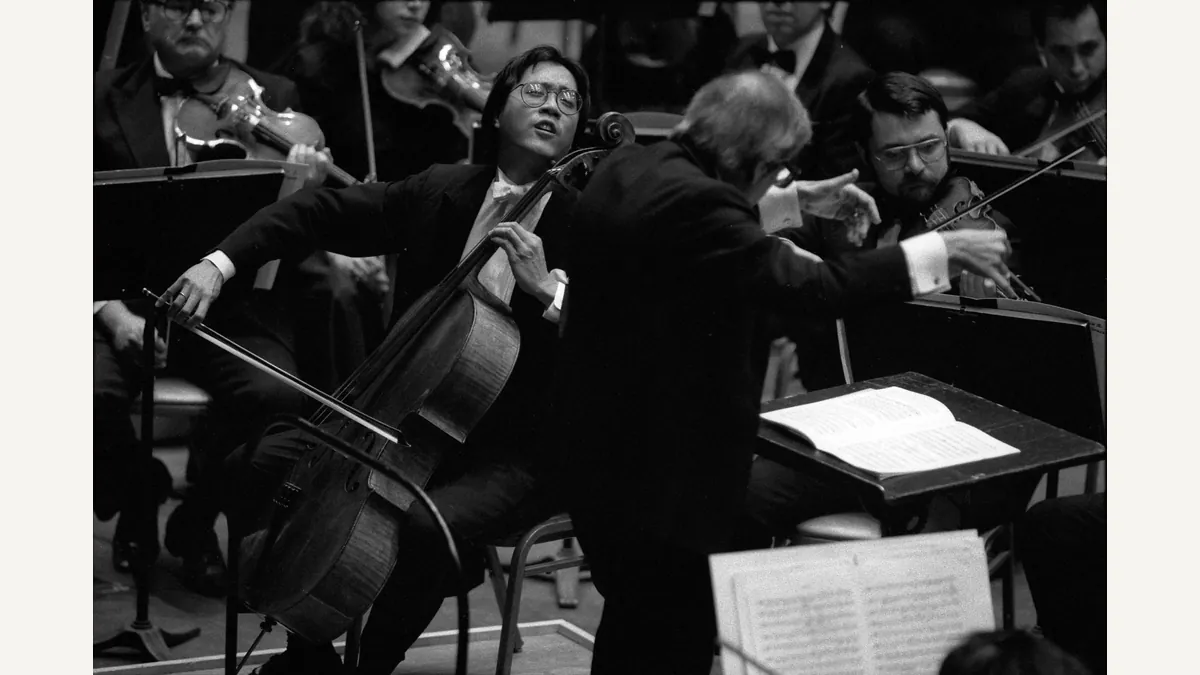
Yo-Yo Ma turns 71 on October 7, 2026. A birthday is a lovely excuse to return to music, and his recorded work offers several ways in: a cello alone, a group finding its shared rhythm, and musicians bringing different traditions into the same room. Each arrangement makes listening feel like a different kind of conversation.
Good News Network's October 7 birthday entry supplies today's occasion. Ma's official biography places his birth in Paris in 1955 and the beginning of his cello studies with his father at age four. The wider Yo-Yo Ma biography provides background on his life and work. The pleasure of this anniversary, though, is in following the music outward from one person toward the people beside him.
Begin with one cello
Ma's official recording page dates Six Evolutions: Bach Cello Suites to 2018. The album gathers all six of Bach's unaccompanied suites. Each begins with a prelude, followed by movements whose names include dances such as the allemande, courante, sarabande, and gigue.
That structure gives a newcomer an inviting place to start. Choose a prelude, then stay for the movement that follows. Listen for a change in pace, the length of a phrase, or the space between gestures. There is no need to know a dance's historical steps to notice that the music has changed its manner of moving.
A solo instrument can make attention feel wonderfully simple. There is one player to follow, yet the musical line can imply relationships between different registers and successive ideas. A low note and a higher response can suggest an exchange even when they come from the same instrument. The ear supplies continuity between them.
The birthday invitation is modest: give one movement enough time to establish its shape. A familiar passage may draw attention to something different on another day. A listener can notice a return, a pause, or a turn in the phrase without needing to convert the experience into a technical verdict.
Let the circle widen
The next step can be The Goat Rodeo Sessions , dated 2011 on Ma's official site. His biography identifies the collaboration with Stuart Duncan, Edgar Meyer, and Chris Thile. The album's track list includes “Attaboy,” “Helping Hand,” and “Here and Heaven.”
An ensemble offers another kind of listening pleasure. Instead of following a single line continuously, try attending to the relationship between parts. Which sound seems to carry a phrase? What happens around it? Does another musician answer, support the pulse, or create room for a new entrance?
Those questions need no score or specialist vocabulary. They give a listener something concrete to follow while leaving the music free to be enjoyable. The satisfying moment may be a small handoff between players, or a sense that several separate gestures have settled into one shared motion.
Collaboration also changes the meaning of a celebrated name on an album. Ma supplies a recognizable starting point, while the other musicians help determine what the group can make together. Paying attention to their contributions turns a birthday appreciation into an opportunity to meet more artists. The circle gets larger without losing its center.
Different traditions can share a musical room
Silkroad's account of its beginnings explains that Ma conceived the organization in 1998, bringing musicians from regions of the historical Silk Road together to create a shared artistic language. Its work has included performance, new music, and educational partnerships.
That idea makes curiosity part of the listening experience. A sound that feels unfamiliar can be an invitation to pay closer attention. A listener may first notice its texture, then its rhythm, then the way it fits beside another instrument. Recognizing every tradition in advance is unnecessary for enjoying a musical exchange.
The most useful birthday connection here is the movement from a solo voice to a meeting of voices. Bach's suites, a small recording ensemble, and Silkroad are distinct projects. Together, they suggest several ways music can organize attention: around one player's unfolding phrase, around musicians responding to each other, and around a group discovering what differences can contribute.
This is an appreciation of established work. The anniversary supplies a fresh reason to explore it. The 2018 Bach album and the 2011 ensemble recording retain their own dates, and Silkroad's founding remains part of a longer musical history.
Make room for another listener
A birthday playlist can be as small as two selections. Choose a solo movement and an ensemble track, then share the pair with someone who might enjoy the contrast. A brief personal reason is enough: the opening caught your attention, a phrase seemed to take its time, or several instruments made you want to follow their exchange.
That gesture keeps the celebration close to everyday life. Music can accompany a quiet break, become the center of an evening, or give two people something pleasant to talk about afterward. The point is to make enough room for a piece to arrive on its own terms.
At 71, Ma's birthday offers a cheerful doorway into that experience. Start with the cello, follow a conversation between musicians, and see where the next sound leads. The gift a listener can pass along is a little time and an invitation to listen together.