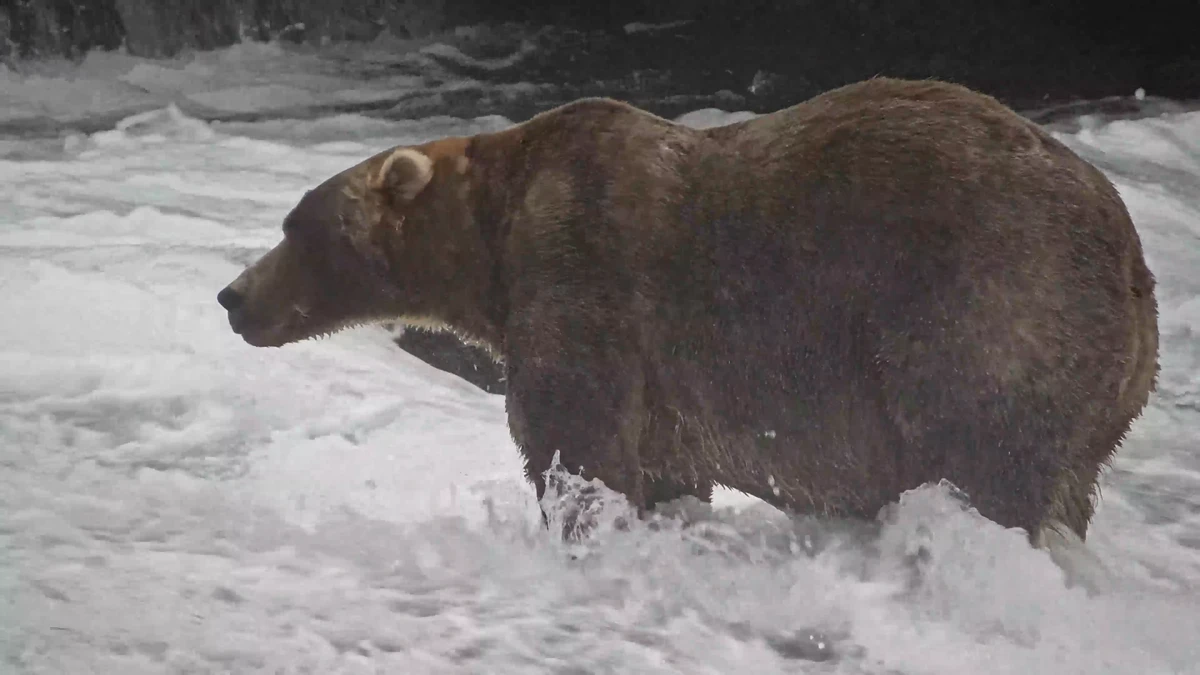
Bear 89 Backpack has won Fat Bear Week 2026, finishing a close final with 103,334 votes to bear 910’s 98,253. The official results on Explore.org put the margin at 5,081 votes. It is a satisfyingly small difference for a competition about such spectacularly large seasonal transformations.
Backpack’s victory gives the annual celebration a new champion and gives viewers another reason to linger at Brooks River. The appeal is wonderfully direct: meet a bear, notice how much its shape changes through the season, and choose the transformation that impresses you most. Behind the playful bracket is a real place and a long stretch of observable animal life.
A close finish for a familiar bear
The September 29 final drew 201,587 votes across the two contenders. Dividing Backpack’s total by that combined count gives about 51.3 percent. That calculation describes the final matchup, not the whole week, and helps show just how close the last choice was.
The organizers list 2,503,731 votes across the competition. A total built from several rounds is different from a count of distinct people. Someone who followed the bracket could participate on more than one day. The number is best read as the volume of voting activity, with the final’s two totals giving the clearest account of the championship result.
That is enough to celebrate the outcome without inventing a weight ranking. Fat Bear Week asks viewers to compare the bears’ seasonal transformations. A popular vote does not establish which animal weighed the most, and no scale reading is needed to appreciate Backpack’s exceptionally rounded autumn appearance.
The name began with a cub
The organizers’ Meet the Bears biographies connect Backpack’s nickname to his early life with his mother, 435 Holly. As a young cub, he climbed onto her back. The image supplied a name that has stayed with him into adulthood.
A name like that makes it easy for viewers to remember an individual across years. It does not make the bear a pet or require a human personality to explain its behavior. The number identifies the animal within a continuing observation record, while the nickname gives the public a friendly way to follow that record.
The official biography describes an experienced bear at Brooks River. Viewers can use that account to orient themselves, then watch the animal’s actual movements, fishing positions, and interactions. A familiar name becomes most useful when it leads to closer observation of a wild bear on its own terms.
The transformation has a seasonal purpose
Katmai’s bears build fat before winter, when stored energy supports their time in the den. The National Park Service’s account of Katmai’s bears places the animals within the park’s landscape and seasonal rhythms. The apparent extravagance of an autumn bear is practical preparation for a different part of the year.
At Brooks River, salmon give viewers a visible way to follow that process. A bear returns to the water, searches, waits, catches fish, and returns again. Across many ordinary moments, the body changes. The before-and-after pictures compress that long sequence into a comparison that can be understood at a glance.
That compression is part of the event’s charm. A September photograph can make a bear’s outline look almost comically abundant beside an earlier image. The change still belongs to the animal’s feeding season. The joke is affectionate because the subject is doing something meaningful and entirely its own.
A celebration that can continue after voting
Alaska Public’s account of Backpack’s win follows the championship result and introduces the bear behind it. The official competition pages provide a second path into the story, with individual biographies and the completed bracket close together.
For someone arriving after the final, the most rewarding starting point is a bear’s own pair of seasonal pictures. Look first at the outline of the body, then at the date and setting of each image. A change in posture can affect how an animal appears, so the photographs are an invitation to notice rather than a precise instrument for calculating weight.
The background on Katmai National Park and Preserve also gives the celebration a geographical home. Brooks River is more than a backdrop for an internet contest. It is part of the Alaska landscape in which these bears find food and carry out the routines that make their seasonal change possible.
The best part is the attention
The bracket turns observation into a shared game. Each matchup gives viewers a modest reason to return, compare pictures, learn a name, and notice another bear’s fishing season. Even after the winning vote is recorded, those habits remain available.
It is possible to enjoy the competition briefly, as a cheerful interruption in a busy day. It is also possible to follow it more closely, reading biographies and watching how different animals use the river. Neither kind of attention needs to turn a bear into a mascot for human virtues. The animals already supply the interest through their size, patience, movement, and remarkable seasonal change.
Backpack’s 5,081-vote margin supplies the tidy ending that a bracket needs. His September portrait supplies the larger pleasure: a wonderfully round brown bear standing in moving water, with a season of feeding written into his outline. The title is settled, and the invitation to keep watching is still open.