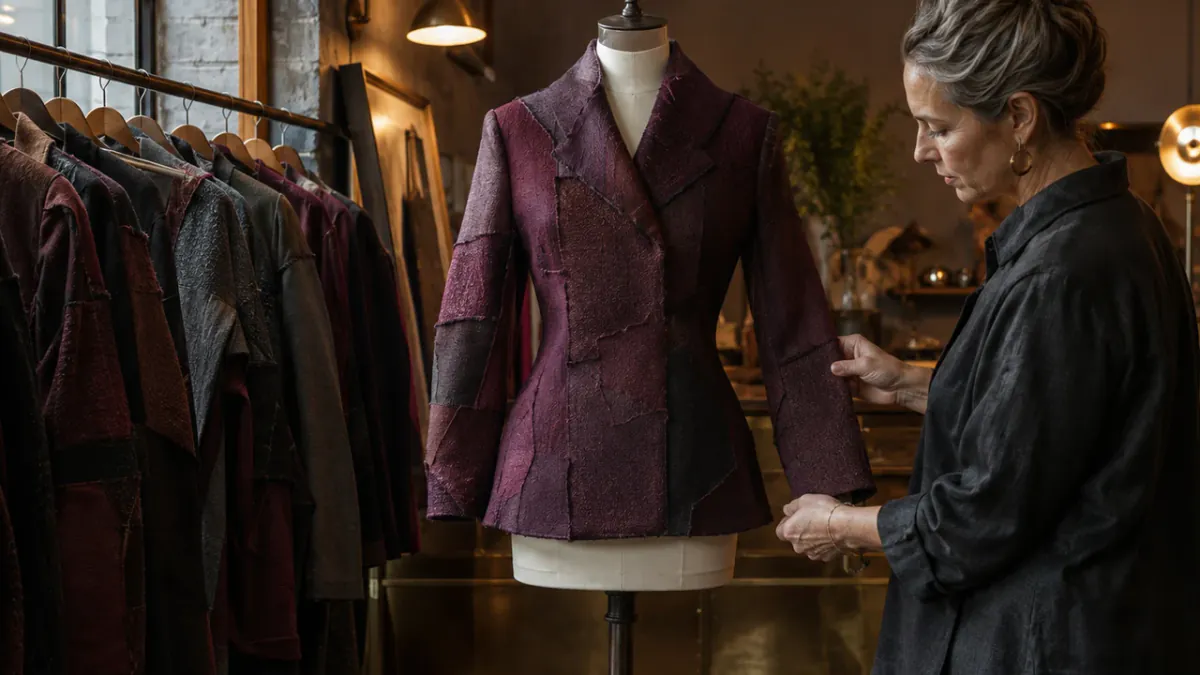
A recovered panel has edges someone else has already cut. Its dimensions, wear and color can redirect the next garment before a new pattern is finished. That is an inviting starting point for the 2026 Redress Design Award: existing material gives the designer something particular to work with.
Jon Liesenfeld won the main prize in a field of eight finalists. Redress named Jasmine Cheuk runner-up and Hong Kong Best winner, while Tal Zohar received the People’s Choice award. The September announcement also described a Remake to Retail challenge, connecting the finalists with a planned collection beyond the runway.
Let the recovered material suggest the next decision
Redress's September 4 announcement places Liesenfeld's win within a runway finale at CENTRESTAGE in Hong Kong. The German designer worked from reconstruction and upcycling, two approaches that begin with existing garments or materials and remake their possibilities through cut, assembly, and finish.
On the official finalists page , Liesenfeld places sustainability at the foundation of fashion and names necessity as a source of invention. Reconstruction and upcycling begin with what is available. A seam, a worn area or the size of a recovered piece can become a decision about where the new garment opens, joins or changes surface.
The finalists took different routes through that problem. Alexandra Burch combined low-waste, upcycling and zero-waste methods. Cheuk worked with disassembly, reconstruction and upcycling, emphasizing post-consumer material. Zohar combined reconstruction, upcycling and zero-waste design. The methods offered several starting points, leaving room for different silhouettes and textures.
The grand final took place on September 2 , with the public announcement following two days later. The Hong Kong runway gave the collections a place to show how their materials moved as clothing. This first look follows that September record and the retail plans attached to it.
The join can become part of the style
Factory surplus, discarded garments, excess stock and furnishing waste were among the reported inputs. Each brings different possibilities. A broad recovered surface may allow one kind of cut, while smaller pieces invite joins. Available quantity can also change how many versions of a design could be made.
A panel can determine a jacket’s balance. A worn surface can become a focal point. Differences between source garments can produce deliberate variation across a group of pieces. These are general possibilities of upcycling , where a designer’s transformation gives existing material another use and another reason to be wanted.
Follow the joins to see some of that thinking. Seam placement, reinforcement and finishing connect old and new components. A visible intervention may become part of the style. A quieter one may let the original textile lead. Both ask for enough care that the result can live as clothing after its first presentation.
A competition gives emerging designers time and attention to develop those choices. Its recognition can bring the work to manufacturers, retailers and people who may wear it. The next connection has to be made through the particular garment, with its own fit, finish and appeal.
From the runway to a question on the rail
In the 2026 programme, the Remake to Retail challenge linked the finalists with manufacturer TAL Apparel and Hong Kong retailer D-mop. The September announcement said discarded, unwearable post-consumer clothing had been remade into retail-ready collections, with a launch planned for later that year. That was the announced next step, rather than evidence that the collection was already available.
A rail creates a different encounter from a runway. Someone can compare a garment with their size, budget and everyday clothes. They need to understand what varies between pieces and how to care for the materials. Those questions can carry the original invention into ownership.
Variation can remain part of the design. A product description might explain that recovered panels differ. Material notes can identify the components, while construction can leave a future repair accessible. Such choices help a customer understand the object in front of them without requiring every remade piece to look identical.
A later launch could show which pieces become available and whether people choose to wear them. That would add evidence about access and use. Measuring environmental performance would require its own account of materials, processes and scale. A wanted garment and a documented impact answer related but separate questions.
Leave room for different kinds of invention
The awards give the designers an opportunity to make continued use look inviting. Liesenfeld’s reconstruction, Cheuk’s work with post-consumer inputs and Zohar’s combination of techniques need not produce one approved look. The material constraint can become part of an individual design language.
There is creative pleasure in that specificity: this recovered surface, this join, this change in proportion. It leaves room to enjoy the clothing while staying curious about the systems that could keep it in use. A broad sustainability label supplies less to look at than a maker’s actual choice.
Our look at Hong Kong’s denim and emerging-design programmes follows other connections among showcases, production and retail. Each offers a different kind of support. For a small practice, the useful connection is the one that helps its particular work reach the next stage.
The cut edge of that recovered panel is still part of the problem and the possibility. It may determine where a seam lands, where another textile enters or which detail makes the new piece recognizable. The retail challenge gives those decisions another place to meet a wearer.