In its October 13 announcement , World Press Photo says exhibition audiences and industry partners missed seeing nature and sports work among winners since the contest adopted its regional model in 2022. The awards restore those subjects to the visible prize list while leaving the contest’s main entry structure in place.
What the new awards recognize
The Nature Award is framed around relationships: people, animals, and the ecosystems they share. World Press Photo names ecological healing, adaptation, coexistence, friction, animal agency, stewardship, and restoration among the themes it hopes to surface. Its description allows for difficult or unresolved stories as well as hopeful ones. The jury retains discretion to consider complex stories about those relationships.
The organization also draws a boundary between this award and environmental-crisis reporting. Work whose main subject is climate crisis, severe pollution, or another broad environmental emergency remains eligible in the existing Singles, Stories, and Long-Term Projects categories. A photographer covering habitat restoration and one documenting industrial pollution might both work in the natural world, while their projects answer different editorial questions. The distinction turns on the story’s central subject.
The Sports Award is similarly broader than a freeze-frame of a professional match. Its published scope includes action and emotion, but also stories about the social and political dynamics of sport, local traditions, community participation, and everyday sporting life. That language leaves room for a small neighborhood competition or a story about access and protest, not just a globally televised final.
One entry route, with more forms of recognition
For 2027, World Press Photo says it will select three awards in each field from eligible Singles and Stories entries submitted across all regions. Photographers do not need to enter separately. The distinction matters because a new prize can sound like a new application path, with its own rules or a different chance to be considered. The organization has not announced that kind of separate track.
The contest opens for entries on December 1. World Press Photo says more information about eligibility and the entry process will follow on November 3. Until that guidance appears, photographers should treat the published award descriptions as a statement of scope, not a complete set of technical submission instructions.
The distinction between recognition and entry route is easy to miss in an award headline. PetaPixel’s October 20 report also explains that photographers do not enter separately. World Press Photo’s own rules remain the practical reference when preparing a submission.
A decisive moment can carry a longer story
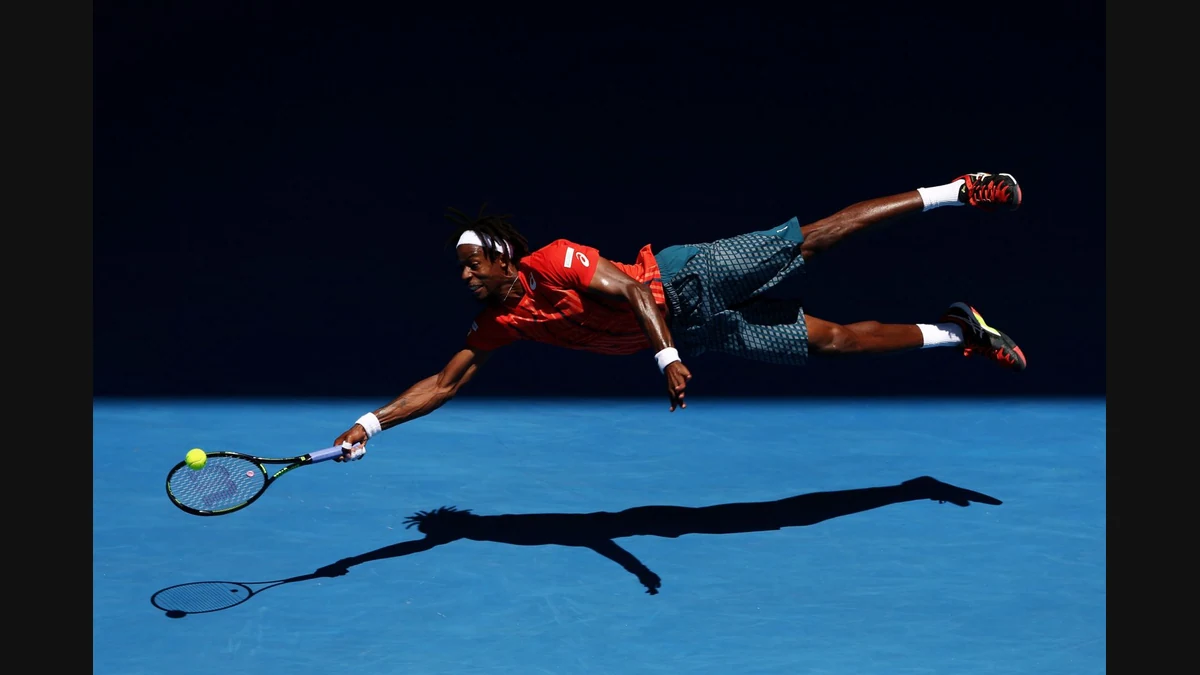
Cameron Spencer’s photograph The Dive, which World Press Photo uses in its announcement , shows Gaël Monfils stretched almost horizontally above a tennis court. The foundation’s collection record dates the frame to January 25, 2016, and identifies it as a 2017 Sports prize winner. It is an earlier award image, not a 2027 entry. The hovering body gives the action an immediately readable shape, while the caption supplies the match and its circumstances.
That relationship between a decisive frame and its surrounding account runs through the new award descriptions. A sports photograph can show action, but a longer story can reveal who has access to a field, what a local tradition means, or how public events carry social conflict. Nature images can describe an animal, but a sequence can show how people and ecosystems shape one another.
The tennis frame also shows how position and timing can simplify a busy event. Monfils, his extended racket and the ball create a line the viewer can follow immediately. The court supplies a comparatively plain field around that action. A photograph made a fraction earlier or later would arrange those elements differently. Its force comes from their brief alignment, while the reporting context prevents the athletic gesture from becoming an anonymous spectacle.
A sequence asks a different kind of question. If the subject is a community’s relationship with a playing field, the decisive sporting moment may be only one part of it. Arrival, preparation, spectators and the space after play can describe relationships that a single action image leaves outside its frame. Those are editorial possibilities suggested by the award’s stated scope, rather than a checklist from the jury. The strongest choice is the format that carries the photographer’s actual reporting.
The award language makes those connections explicit. It also gives photographers an incentive to think about the shape of a story, not just the most dramatic frame. A single image may fit the Singles pool. A sequence may better show adaptation, a community tradition, or a relationship changing over time. The contest’s announcement does not promise that one format will be favored. It says eligible Singles and Stories will both be considered.
For readers, the practical change is simple: the next contest’s winners should include a more visible place for nature and sport. For photographers, the useful next step is to watch for the November 3 eligibility guidance, then submit through the existing contest rules. The first editing question can remain a photographic one: which frame carries the story, and what context does a viewer need beside it?