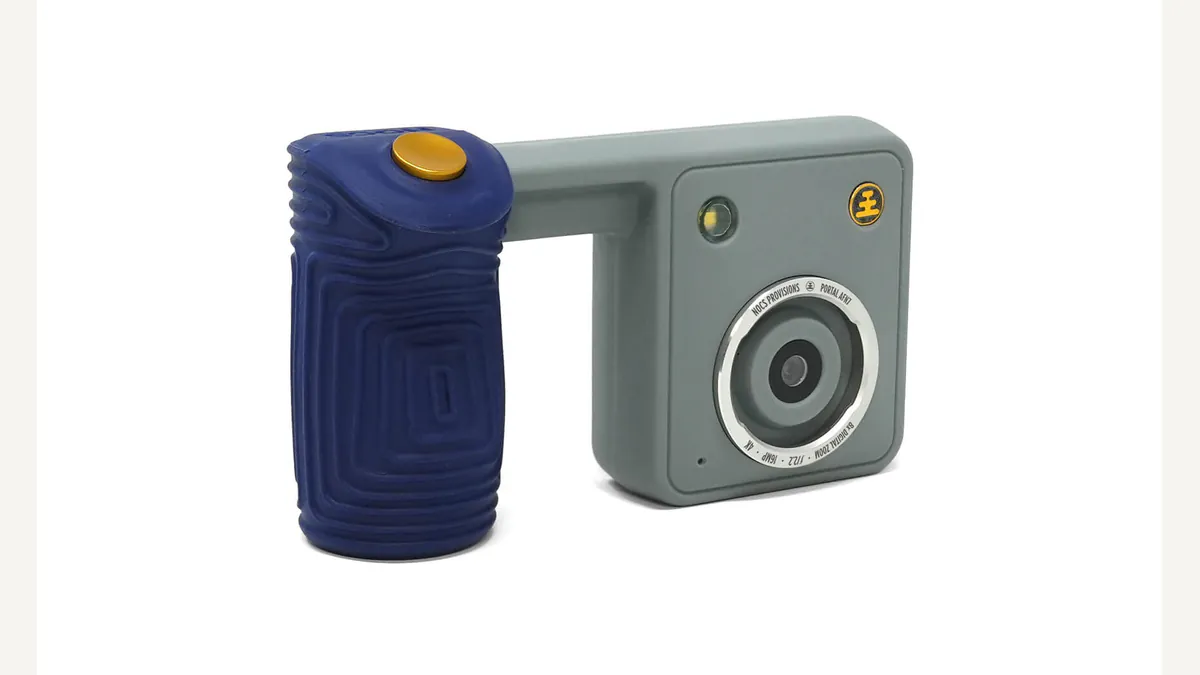
Nocs Provisions’ Portal AFN7 removes photo playback from a small digital camera while keeping an electronic viewfinder for framing. That combination separates two activities often joined on a rear screen: seeing what the lens sees and reviewing the picture afterward. The camera also connects its maker’s viewing optics to image capture.
The Phoblographer’s October 4 introduction presents the camera as a compact outdoor companion. Nocs’ official product page supplies the specifications and explains the included NocDoc alignment accessory. Together, they establish a particular shooting arrangement, rather than a promise that removing playback will improve every photograph.
Screen-free needs a precise meaning
The Portal does have displays. Its electronic viewfinder shows the lens view, and a small OLED serves the menus. What it omits is a screen for reviewing captured photographs. The distinction matters because a live view and an image review solve different problems.
A viewfinder helps place the frame around the subject. Playback lets the photographer inspect the resulting file, compare attempts, and decide whether to repeat a shot. Removing the second activity changes the shooting rhythm while retaining the first. It does not turn the camera into a film camera or remove the electronic image pipeline.
That is a useful starting point for understanding the broader digital camera category. A digital device can offer many different interfaces around capture and review. The presence of a rear screen is one design choice within that category, rather than its defining feature.
The Portal’s arrangement may appeal to someone who wants to keep moving after making an exposure. The consequence is equally concrete: the photographer has less opportunity to inspect a finished picture immediately. That tradeoff is part of the design, not a universal lesson about how everyone should photograph.
Viewing optics become part of the frame
NocDoc is an alignment accessory that connects at the camera’s front. Nocs describes bringing a binocular or monocular eyecup against it so the camera can photograph through the viewing optic. The viewfinder then becomes especially useful because it shows the image arriving through that optical arrangement.
This is different from simply pointing a camera toward a distant subject. The viewing optic changes the image entering the camera. Alignment, the available field of view, and the relationship between the two devices become part of the process. A live electronic view gives the photographer feedback about that combined frame.
It is also different from an interchangeable camera lens mounted directly to a camera body. The Portal remains a fixed-lens camera while the accessory helps position another optic in front of it. That distinction keeps the product’s photographic role understandable without borrowing expectations from a larger system camera.
A photographer considering this arrangement should look at the complete optical path. The camera’s own lens and sensor are only part of it. The binocular or monocular, its eyepiece, and the alignment between devices influence what reaches the frame. A claim about the camera alone cannot establish the performance of every possible combination.
Small specifications still need careful reading
Nocs lists 16-megapixel JPEG capture and 4K video, with a 1/3.06-inch sensor and a fixed-focus lens. The published focus range begins at one meter. These are manufacturer specifications. They identify the camera’s basic capture arrangement without measuring its image quality against a phone or another camera.
Fixed focus removes a focusing operation, but it also defines a working boundary. A subject placed closer than the stated range does not become a supported close-up merely because it fits within the frame. Composition and focus remain different questions.
The official page contains a focal-length inconsistency. Its overview uses a 28mm-equivalent description, while the detailed specifications list 22.5mm equivalent. Those figures describe different angles of view. Until Nocs resolves the difference, neither should be presented as a settled specification for planning an exact field of view.
That discrepancy does not erase the camera’s other documented features. It does make the distinction between a general product idea and a precise shooting specification useful. Someone who needs an exact framing comparison should wait for a consistent manufacturer value or a measured review.
Weather resistance has a clear boundary
The camera is listed at IP56. Nocs’ own FAQ describes resistance to dust and water exposure while explicitly excluding underwater use. An outdoor design should therefore not be turned into a waterproof or swimming-camera claim.
Grip, portability, and resistance to weather can each support carrying a camera outside. They remain separate from submersion, optical performance, and the condition of another device used in front of the lens. A viewing optic’s own weather rating does not automatically extend to the camera or the connection between them.
The Portal also keeps file handling separate from its screen-free capture interface. The official Portal help page describes USB-C file transfer, while the product specifications list microSD storage. The absence of playback on the camera does not make the pictures inaccessible. It moves review to another device and another moment.
That separation is the product’s most interesting photographic choice. The camera offers a way to frame digitally, capture without an immediate review screen, and sometimes work through an existing viewing optic. Its value will depend on whether that arrangement suits the intended photographs. A measured review can address rendering and handling later. This first look establishes the design and its concrete limits.