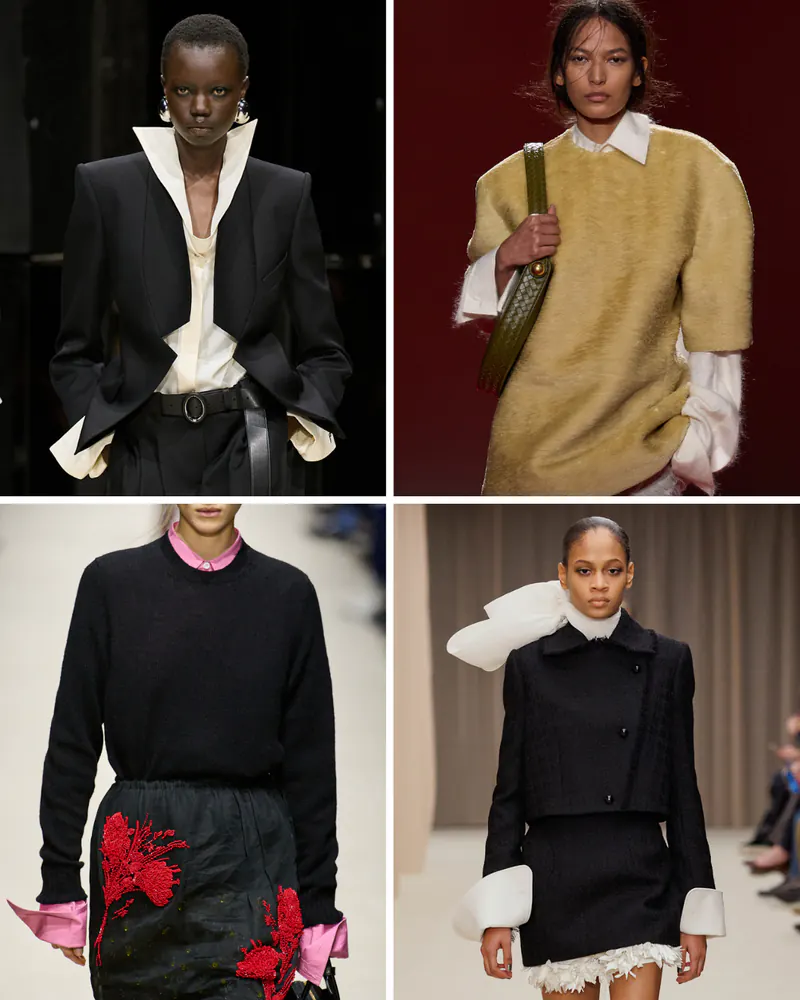
A white collar rises high above a dark jacket. Broad cuffs break the line of its sleeves. In the runway comparison below, small areas of pale cloth give a familiar tailored outline something new to do. That is an inviting way into fall 2026: follow where a detail changes the larger shape.
Give one detail somewhere to lead the eye
In her New York fall runway review for Fashionista , Dhani Mau follows boatnecks, tall collars, sculptural buttons, capes and brooches. Gray and black-and-white looks give those changes a relatively quiet field. A deep eggplant shade offers another route, concentrating attention through color as well as outline.
A boatneck can widen the visible line around the shoulders. Contrast buttons make a route down a coat. A brooch places a bright interruption at a lapel or throat. You can borrow one of those relationships without reproducing a whole runway outfit. The interesting choice is where the eye should stop.
This outlook was written on September 7, before New York , London and Paris showed their spring/summer 2027 collections. From that position, lighter fabric could carry some of fall’s detail into another season. A sheer collar or a sharp cuff was a possibility to watch, rather than a claim about a collection still to be shown.
Eliza Huber’s September 7 report on diamond drop earrings offers quieter jewelry as a counterpoint to expressive clothes. A pronounced collar and a small point of light can give each other room. A clean neckline can let an earring become the focal detail instead. Both leave space for a wearer’s own preference.
A belt or bow gives loose fabric a boundary
Who What Wear's report on autumn tops brings loose sheer layers, tied waists, asymmetric cuts, peplums, and conspicuous collars and cuffs into the same conversation. These details divide naturally into two moods. One is airy and translucent, with the underlayer becoming part of the composition. The other draws the body into focus through a tied waist, a peplum, or an off-centre line.
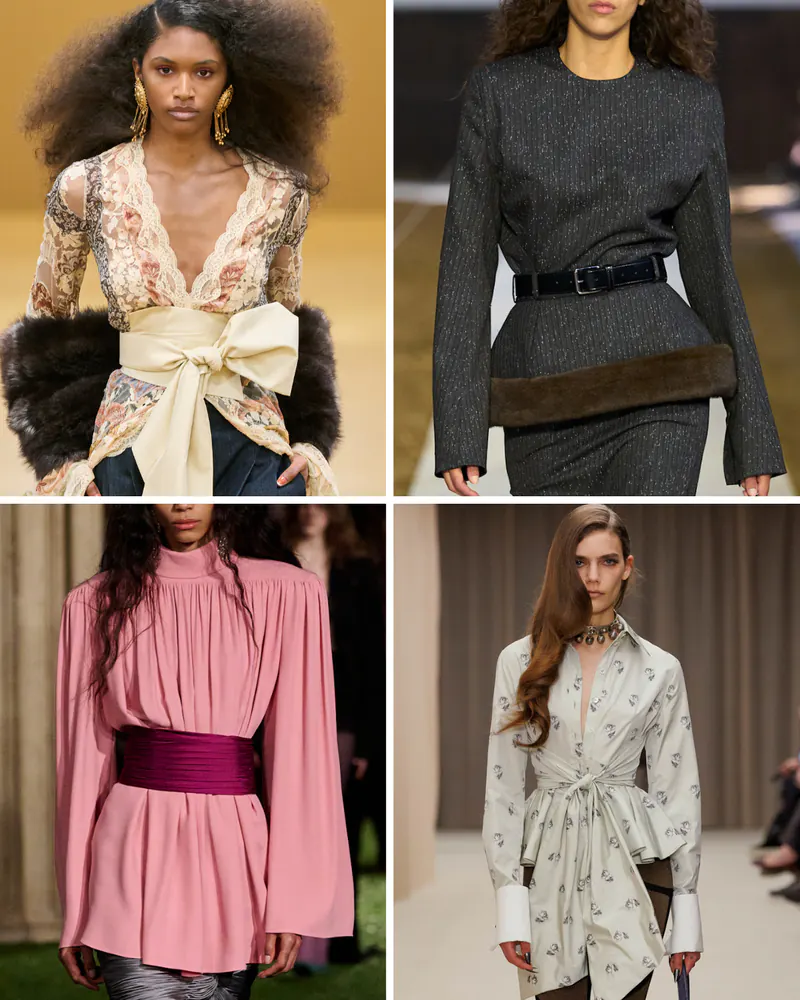
The waist comparison gives that idea several shapes. A broad cream bow gathers one printed top, while a narrow black belt defines a darker jacket. Elsewhere, a deep pink band interrupts a softer pink shirt. The proportions differ, but each places a clear boundary within fabric that can move around it.
Softness and structure can therefore share a garment. A tied area can hold a loose shirt in one place while the sleeves keep their volume. The September forecast asked what might happen when those choices moved into lighter spring fabrics. It offered a comparison to follow, rather than an instruction that every outfit should define the waist.
Let ornament meet a quieter surface
Vogue’s fall runway synthesis brings lace-trimmed cuffs, historically inflected shapes, dropped waists and color blocking beside practical separates. The combination makes room for a small decorative passage within an otherwise familiar garment.
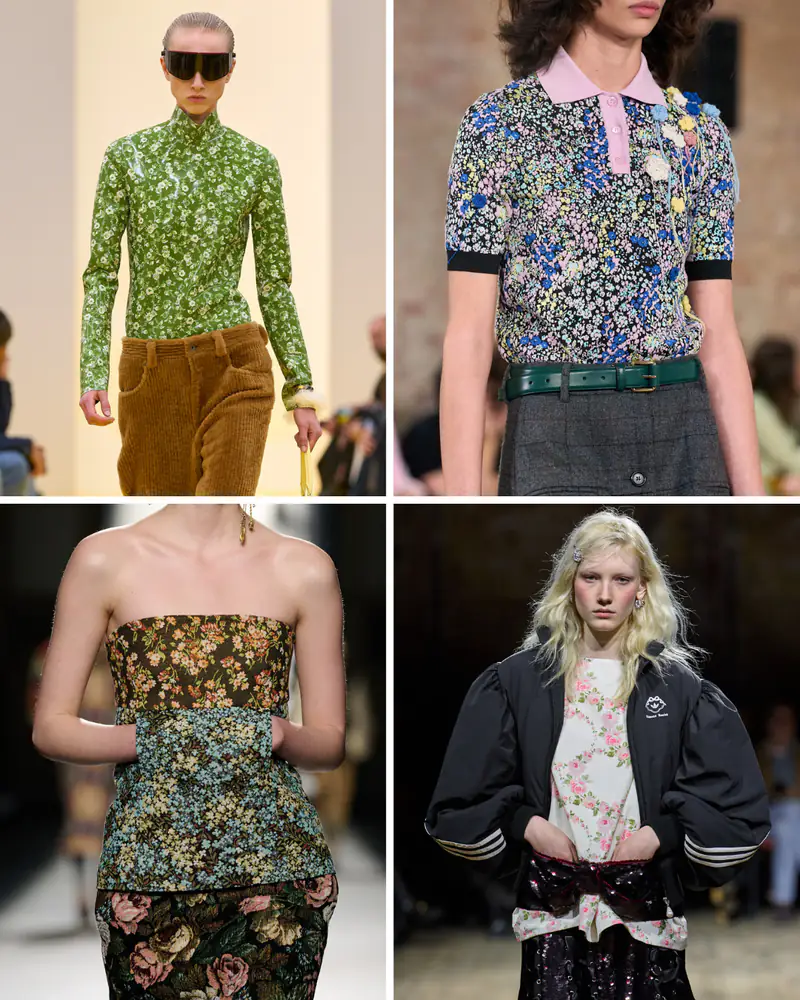
In the floral comparison, a green patterned top meets brown ribbed trousers, while a pink collar gives another print a separate edge. Pattern does not have to occupy the whole outfit in the same way. A plain area, a visible seam or a contrasting surface can give the ornament somewhere to finish.
Copenhagen supplied the completed spring evidence
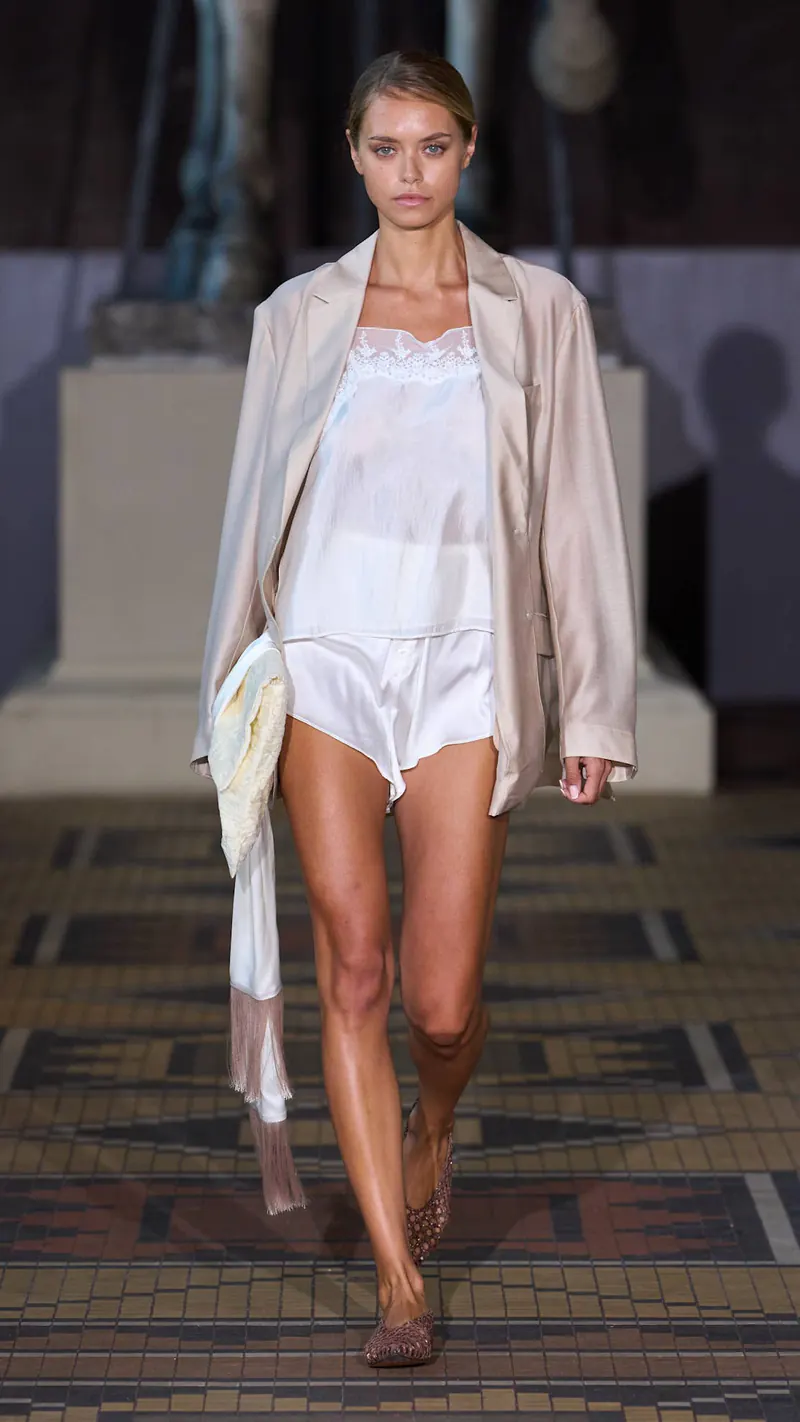
Copenhagen’s spring shows had already finished. Fashionista’s report supplied evidence of pajama dressing, light blue, mixed color and pattern, balloon trousers and uneven hems. The pictured Garment look sets a pale jacket around a white lace-edged top and shorts, placing a tailored outline beside an intimate clothing reference.
That is a useful combination to examine without adopting it whole. The jacket creates a long outer line while the shorter layers remain visible within it. Fabric, hem length and the amount of space around the body give the separate pieces their relationship.
From September 7, that completed work suggested questions for the next cities. Would ease become cleaner separates in New York, more emphatic volume in London or a different line in Paris? Those were city-specific hypotheses. Copenhagen gave them a starting reference, rather than predicting the answer for every designer.
The New York question: identity in an everyday separate
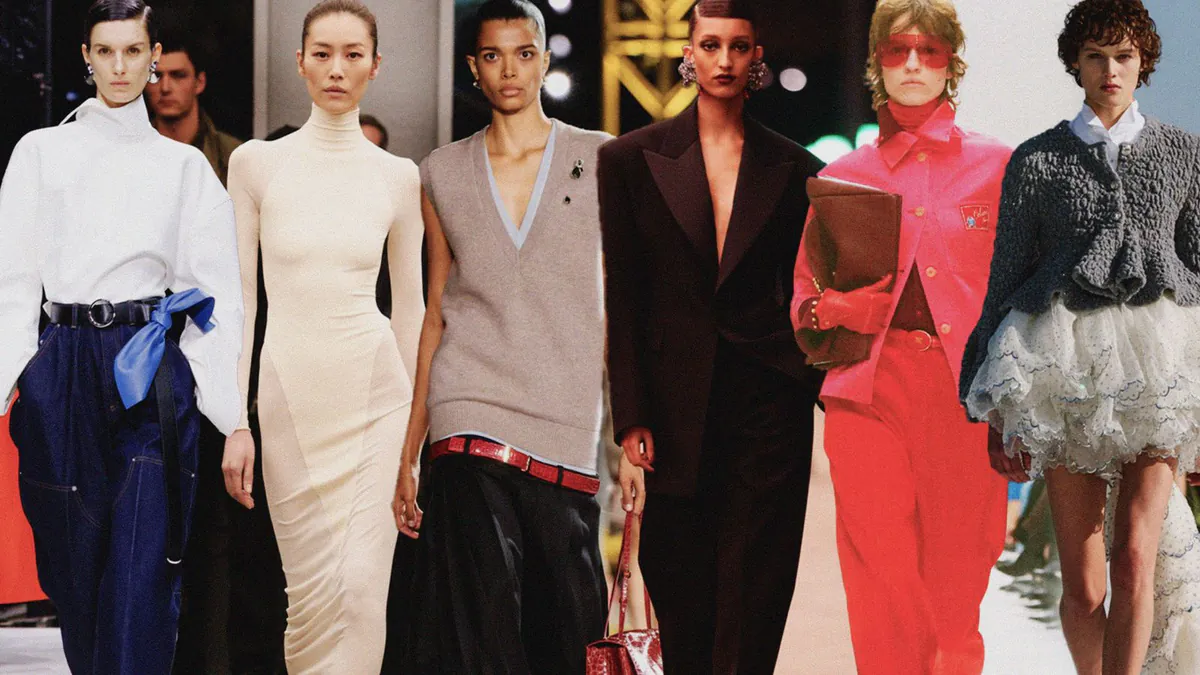
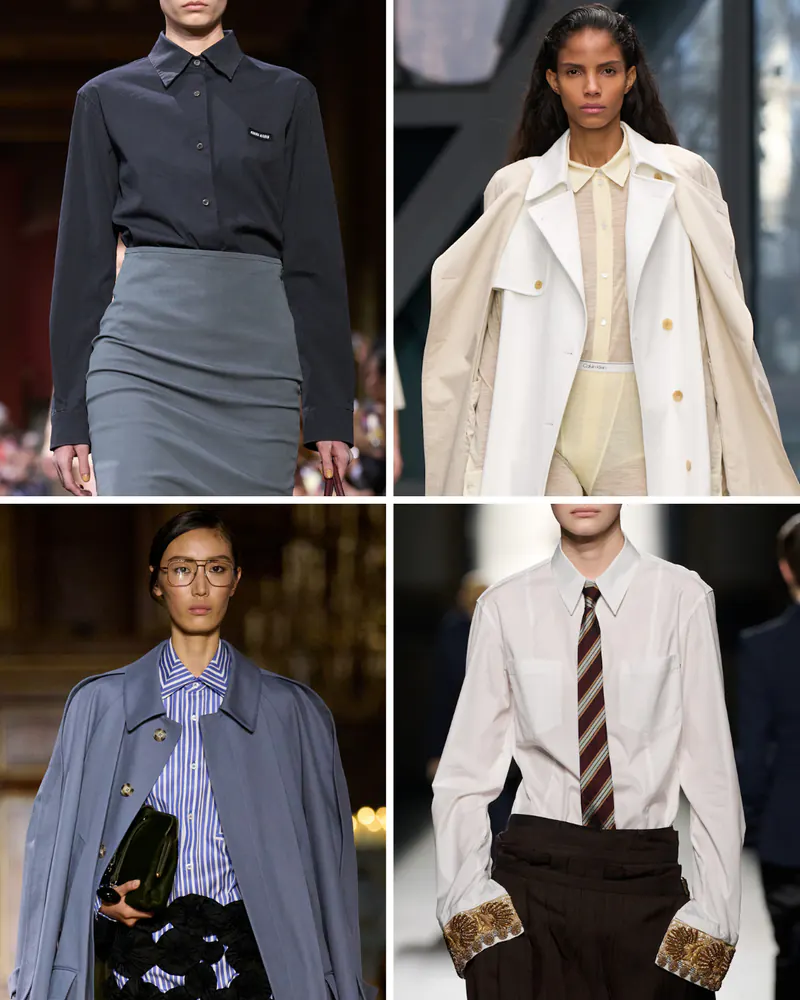
For New York, the proposed question was how much identity could fit inside an everyday separate. A shirt could have a conventional outline and still change through its collar, cuff or fastening. The supporting shirting images come from existing collections and illustrate that possibility.
The CFDA preliminary schedule named Henry Zankov’s Diane von Furstenberg debut as the opening and Thom Browne as the close. In that pre-show context, fluid trousers, a defined jacket or expressive knitwear were plausible directions to watch. The calendar established the appointments, while the clothing forecast remained this article’s interpretation.
Readers drawn to the Calvin Klein styling pictured with the article can explore the brand's broader clothing range through Calvin Klein's Amazon Store .
The London question: how much room for a bow?
The British Fashion Council’s provisional announcement named McQueen’s return with Seán McGirr’s London debut, Christopher Kane’s first Mulberry collection, Simone Rocha, Erdem, Roksanda and Richard Quinn. Those different practices gave the September outlook a reason to watch how decoration and silhouette might meet.
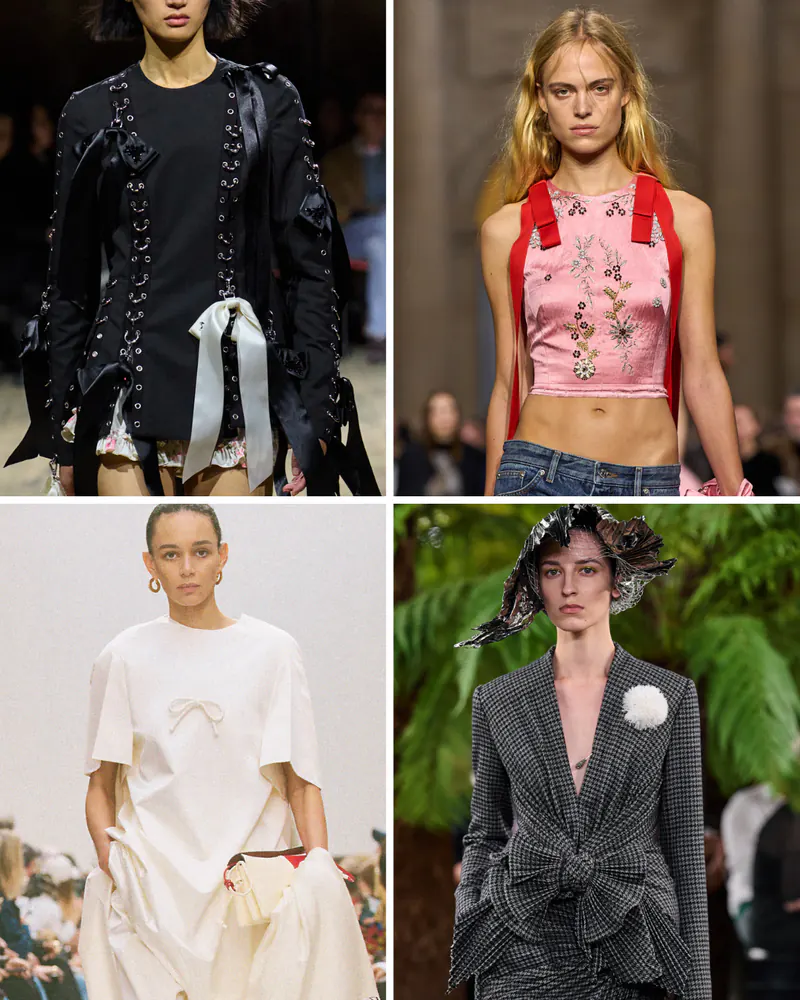
The bow comparison offers several earlier approaches to that question. A small pale bow can sit near the center of a plain top. A larger ribbon can interrupt a darker garment. The placement and scale change how much of the outline the detail is allowed to organize. The images were references for the London forecast, not photographs from its then-unshown collections.
The Paris question: where should the line travel?
Vogue’s Paris schedule report identified Drew Henry at Courrèges and Kai Nesselrath at Carven, alongside a calendar including Dior, Saint Laurent, Chanel, Loewe and Miu Miu. The range invited a question about cut rather than a prediction that every house would share one look.
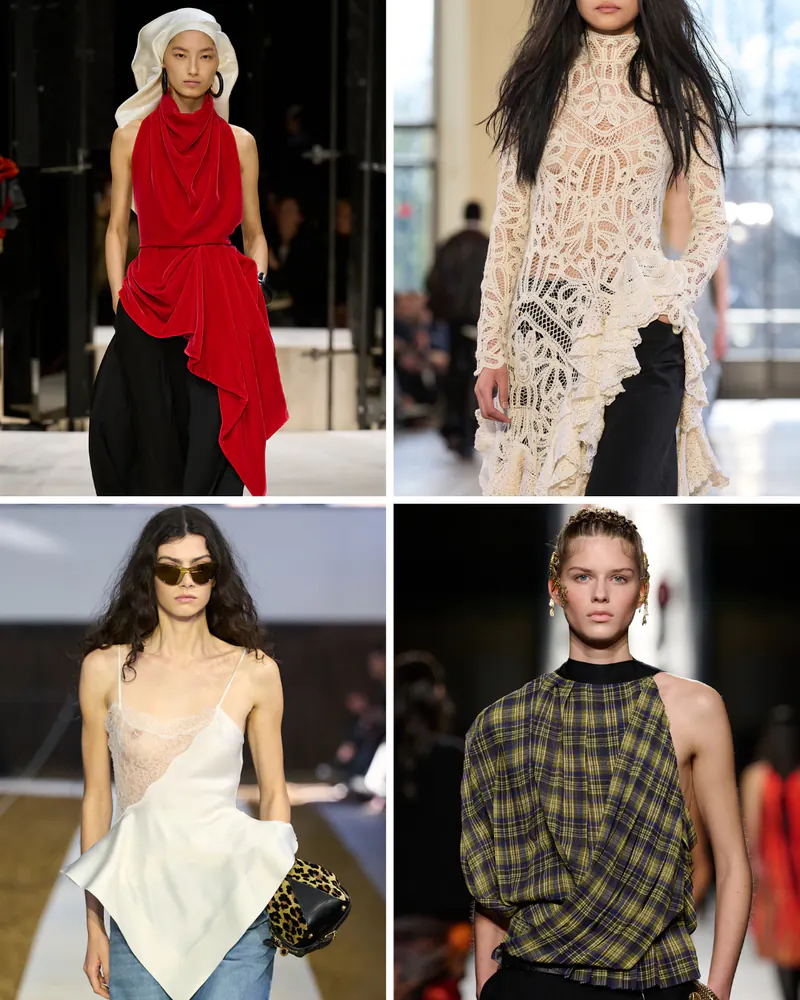
The asymmetric reference images make that question visible. Red fabric gathers and falls to one side in one look. A white lace-edged top creates another diagonal against the clothing beneath it. Those existing choices let the forecast ask how lighter fabrics might carry an uneven hem or a longer line into spring.
Return to the white collar against the dark jacket. Its shape is small compared with the whole garment, yet it changes where the eye enters the look. That relationship remains useful after a season’s forecasts have become history: one piece of cloth can give familiar clothes another outline.
Season reference: This outlook concerns ready-to-wear spring/summer 2027 previews shown in 2026, written before the New York, London, and Paris collections opened. New York's official dates were September 10–15, London's September 17–21, and Paris September 28–October 6 .