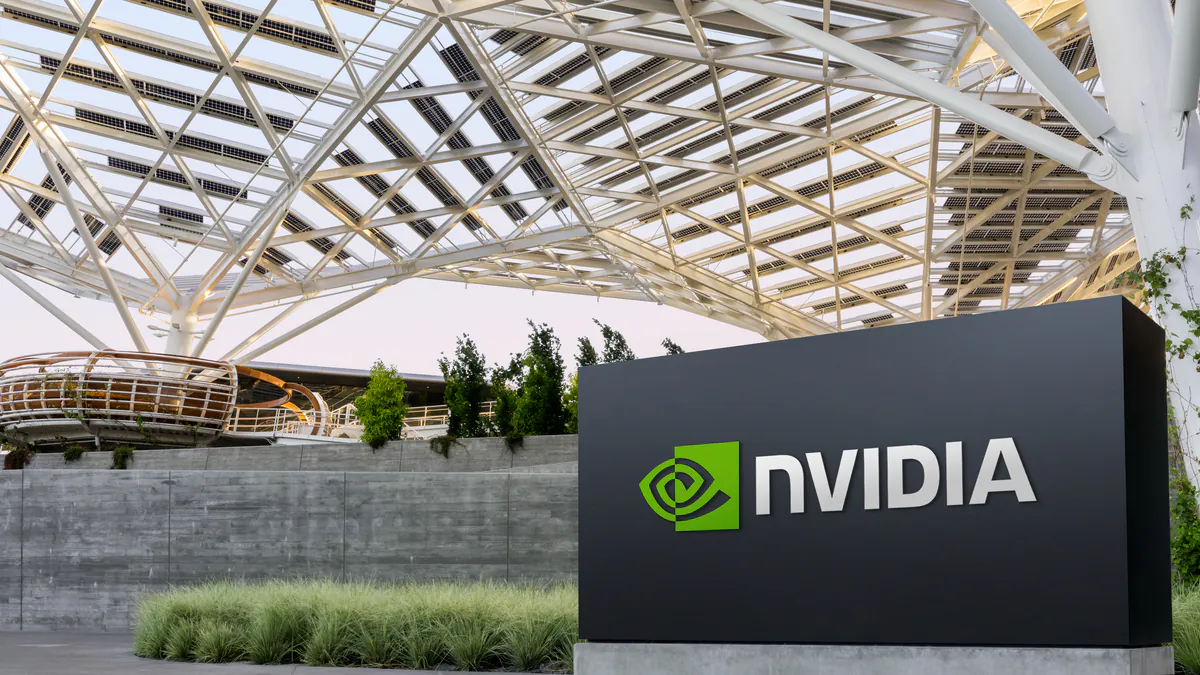
A chip sale sits inside a much longer chain of decisions. Someone chooses a model, prepares the software, connects the processors, finds power and finances the place where they will run. Nvidia is building a role at more of those steps. Its proposed acquisition of Hugging Face reaches toward the beginning, where developers find the models that can eventually create demand for computing.
This deep dive revisits Nvidia’s September 3, 2026 Hugging Face announcement and examines the wider strategy behind it. The analysis draws on public filings and company disclosures available on September 5, 2026.
Announced September 3, the proposed transaction includes approximately $11.9 billion for Hugging Face shareholders and up to $1 billion in equity incentives for employees. Completion is expected in the first half of 2027, subject to regulatory approvals and other closing conditions.
The agreement followed a quarter that shows the financial scale behind those ambitions. For the three months ended July 26, Nvidia reported $96.2 billion in revenue , up 106% from a year earlier. Its Data Center business generated $89 billion, more than nine tenths of the total, while the company’s overall gross margin reached 75%.
Our earlier Hugging Face acquisition analysis follows the deal’s governance questions. Step back from the transaction and another question appears: how much of the route from a developer’s experiment to a paying workload can Nvidia help organize?
The DSX infrastructure announcement puts that ambition at the scale of a facility. Software and financing announcements reach in other directions. Reading them together reveals a platform that can help a customer build, run and fund computing, while leaving Nvidia exposed to more of the work required for that customer to succeed.
The buyer needs the system around the chip
Nvidia’s hardware portfolio now spans graphics processing units, or GPUs, central processing units, networking equipment, specialized infrastructure processors and complete computing systems. Its annual report describes an integrated computing platform, rather than a business built around standalone chips.
Blackwell and Blackwell Ultra sit within an expanding product lineup that now includes Vera Rubin. Nvidia says Rubin has entered full production , combining processors, inference accelerators, storage infrastructure and networking in an integrated architecture. That production milestone does not mean every configuration is already available from every supplier.
Networking is central to the strategy. NVLink connects processors within tightly integrated systems. InfiniBand and Spectrum Ethernet connect larger computing environments. BlueField processors handle infrastructure functions such as networking, storage and security. Nvidia therefore has products both for performing calculations and for moving and managing the data those calculations require.
Its DSX platform extends that approach to the design, deployment and operation of entire AI facilities. Meanwhile, manufacturers including Dell, HPE, Lenovo, Supermicro and Foxconn are building systems around Nvidia’s architecture. Nvidia supplies the technical foundation without having to manufacture and deliver every component itself.
For a buyer, the competing chip arrives with a larger question attached. Will the application run, will the network keep up and can the team deploy and maintain the system at an acceptable cost? Component performance remains important inside that comparison. Nvidia’s integrated approach gives the buyer more of the surrounding system from one platform, and gives Nvidia more of the result to deliver. (Annual report )
An application brings its tools and habits with it
CUDA is the foundation of Nvidia’s software strategy. The programming platform allows developers to use its GPUs for general computing tasks, supported by libraries and tools for different applications.
A team that has built its application, tools and engineering knowledge around CUDA has made an investment beyond the hardware order. Moving to another processor can mean changing that surrounding work too. A rival’s price or benchmark therefore enters a comparison with the effort of migration. That effort varies by application, and it can be worth making. (CUDA programming guide )
Nvidia AI Enterprise extends the relationship into supported business software. Its offerings include infrastructure tools, model development software and enterprise services. NIM packages model inference, the process of running a trained model to produce results, while NeMo provides tools for customizing and managing AI models.
Not every offering requires a paid subscription. Nvidia distinguishes between free NIM releases and commercial options that include supported production software. NIM Certified Production Branch requires an active AI Enterprise subscription, while other releases can be used without one under their applicable terms. The revenue opportunity includes maintenance and enterprise support, not merely access to downloadable software.
DGX Cloud Lepton adds another service layer, giving developers a common interface for discovering computing resources and developing, training and deploying AI across a network of providers. Nvidia can help organize access to infrastructure without owning every data center involved.
The company also develops Nemotron models and its Agent Toolkit , working with enterprise software companies on applications that combine models with tools, memory and workflow management. These efforts put Nvidia closer to application development, rather than leaving it solely underneath the software as a hardware supplier.
The software can earn support or subscription revenue while helping a customer make more use of the hardware. An experiment that becomes a continuously used application also creates a different kind of computing demand. That is the connection to watch: does a convenient development path lead to work someone keeps paying to run? (AI Enterprise documentation )
Different deals bring different kinds of control
The acquisitions have filled recognizable gaps around the processor: moving data, allocating work and reaching the people who choose models.
The approximately $7 billion purchase of Mellanox , completed in 2020, brought a major networking business. The acquisition of Cumulus Networks that year added networking software. Together, they expanded Nvidia’s role in how computing systems communicate.
The completed acquisition of Run:ai added software for allocating and managing GPU resources. In December 2025, Nvidia acquired SchedMD , the company behind Slurm, a workload scheduler used in high performance computing and AI. Nvidia said it would continue developing Slurm as open source, vendor neutral software.
Hugging Face would add something different: a large developer community. Nvidia says more than 18 million developers, researchers and creators use the platform. It has committed to preserving users’ choice of models, frameworks, clouds and computing platforms, without requiring Nvidia hardware. Those commitments are central to the proposed acquisition, but their implementation remains a question for after the deal closes.
A developer community carries trust along with distribution. If Hugging Face users saw product rankings or commercial terms steering them toward Nvidia against their interests, the connection could lose value. The hardware-choice commitment gives them something specific to judge if the deal closes: what models and infrastructure remain practical choices on the platform?
Not every transaction involves buying a company. In December 2025, Nvidia entered a nonexclusive agreement to license Groq’s inference technology, with key Groq personnel joining Nvidia. Groq remained independent. On August 24, Nvidia announced that its Groq 3 LPX inference accelerator was in full production as an extension of Vera Rubin.
Buying, licensing and recruiting each bring a different relationship with the underlying technology. Grouping them all as acquisitions would obscure what Nvidia controls and what remains outside it. The wider platform grows through several kinds of agreement, with different obligations attached.
Another company’s processor can still need Nvidia
Nvidia’s cloud relationships include Amazon Web Services, Microsoft Azure, Google Cloud and Oracle Cloud Infrastructure. These providers put its computing systems within reach of customers that do not want to buy and operate their own equipment.
On August 26, AWS and Nvidia announced plans to deploy 2 million additional Nvidia GPUs during 2027 and 2028. Their collaboration also covers CPUs, networking, models and robotics. The GPU figure represents a deployment plan, not capacity already installed.
More revealing is Nvidia’s willingness to accommodate processors it does not design. NVLink Fusion extends its interconnect architecture to custom chips. A March partnership with Marvell included a $2 billion investment and plans to connect Marvell custom accelerators with Nvidia infrastructure. AWS has also announced support for NVLink Fusion in its next generation Trainium chips.
On August 31, Nvidia announced a $3.5 billion investment in MediaTek convertible bonds , alongside expanded collaboration in custom computing, personal computers and automotive technology. Separately, Nvidia’s $5 billion equity investment in Intel closed in December 2025. These are investments in other chip companies, not acquisitions of them.
Nvidia is also investing in suppliers. In March, it announced $2 billion investments in each of Coherent and Lumentum , accompanied by partnerships involving optical technologies, manufacturing capacity and purchase commitments.
This leaves Nvidia a route into a system even when another company designs the processor. Its interconnect, networking or software can remain part of the purchase. Supplier investments reach in the other direction, toward components needed to deliver that system. The resulting network of relationships is broader than a list of chip customers. (Marvell partnership )
Follow the money from financing to paying use
Selling the equipment and helping a buyer finance it can bring demand closer. It can also link the seller more tightly to the buyer’s ability to turn that equipment into a business. Nvidia’s investments and credit arrangements make that link increasingly visible.
In February, OpenAI announced a financing round that included $30 billion from Nvidia, alongside investments from Amazon and SoftBank. The announcement also described expanded use of Nvidia infrastructure.
A separate partnership announced in November 2025 included Nvidia’s commitment to invest up to $10 billion in Anthropic. Anthropic committed to purchasing $30 billion of Azure computing capacity and contracting additional capacity.
Nvidia also invested $2 billion in CoreWeave in January 2026, expanding a collaboration intended to support more than five gigawatts of AI infrastructure by 2030. In March, it announced a $2 billion investment in Nebius alongside another infrastructure partnership.
Several customer names can still share one economic risk. Developers and infrastructure providers all need AI usage to earn enough to support the capacity being built. Backing more companies broadens Nvidia’s relationships, while the demand behind them may remain closely connected.
In August, Nvidia announced partnerships with Apollo, BlackRock, Blackstone, Brookfield, Goldman Sachs and KKR to establish financing platforms targeting more than $500 billion in third-party capital over time. That is a fundraising ambition subject to definitive agreements, not Nvidia’s own investment, money already raised or revenue already secured.
Another arrangement creates more direct exposure. Nvidia disclosed guarantees capped at $105 billion supporting defined lease and power obligations for OpenAI related infrastructure at an SB Energy campus in Ohio. The guarantees take effect as individual leases begin, with the first facilities expected to enter service in Nvidia’s fiscal 2029. They cover specified payment defaults, and exposure declines as OpenAI makes its lease payments. They are not an immediate cash payment. In exchange, the site is to use Nvidia AI infrastructure exclusively, subject to limited exceptions.
A financed building, an installed rack and a profitable customer workload are different milestones. The guarantee helps explain how a project could reach the first, while equipment and software support the next. Paying use must sustain the last. Helping construction proceed can accelerate Nvidia’s opportunity and bring customer creditworthiness and project economics closer to its own balance sheet. (Quarterly filing )
Each industry brings another partner and another test
The same computing platform enters a factory, a research lab and a creative workstation through different partners. Each brings data, equipment and professional responsibilities that a processor supplier cannot supply alone. The announced relationships show where Nvidia wants its tools to become part of established work.
With Siemens , it is developing industrial AI infrastructure spanning design, manufacturing and operations. Its Dassault Systèmes partnership connects Nvidia technology with virtual twins, digital representations used to model products and industrial systems.
In robotics, Isaac combines simulation, development tools and models, while Cosmos and GR00T extend its work in physical AI and robot development. A July announcement described collaborations involving Japanese companies including FANUC, Fujitsu, Hitachi and Yaskawa. These are development relationships, not evidence that every resulting application is ready for widespread commercial deployment.
The automotive approach is similar. DRIVE Hyperion combines computing, software and a compatible sensor architecture for automated driving. Nvidia’s May announcement included planned vehicle programs involving Foxconn, VinFast, Uber and HUMAIN. Its role is to supply a platform to manufacturers and mobility companies, rather than operate every vehicle itself.
In healthcare, Nvidia and Eli Lilly announced a joint AI research laboratory , with plans to invest up to $1 billion over five years in talent, infrastructure and computing. The initiative targets drug discovery and related research. Its investment scale should not be confused with demonstrated clinical results.
For creative professionals, Nvidia’s expanded Adobe partnership covers Firefly models, content production and marketing workflows. Its Microsoft collaboration on RTX Spark extends its technology into Windows computers designed for local AI, creative applications and gaming.
Those efforts sit alongside its established consumer products, including GeForce RTX graphics cards , DLSS graphics technology and the GeForce NOW cloud gaming service. They broaden the platform’s reach, although the quarterly revenue mix makes clear how heavily the overall business still depends on data centers.
National infrastructure provides another avenue for expansion. In July, Nvidia announced a project with Noetra , supported by Japan’s Ministry of Economy, Trade and Industry, to build a Vera Rubin based facility for industrial and physical AI.
“Sovereign AI” brings a location and a customer to that strategy. Local infrastructure can give an organization more control over its data and operating arrangements. Dependence on external chips, software and supply chains can remain. The practical degree of control comes from the particular system and agreements, beyond where the building stands.
Where the empire remains vulnerable
Nvidia’s breadth does not remove competition. Nor are its competitors limited to offering isolated chips.
In February, AMD and Meta announced an agreement covering deployments of up to six gigawatts of AMD GPUs over multiple years. The relationship aligns chips, systems and software, demonstrating that rivals are pursuing integrated platforms too.
Anthropic has described a computing strategy that uses Google TPUs, Amazon Trainium and Nvidia GPUs. A major customer can deepen its relationship with Nvidia while simultaneously investing in alternatives. A competing platform does not need to replace Nvidia everywhere to win a commercially important share of that customer’s spending.
Nvidia also depends on external manufacturing partners , including TSMC, and a supply chain concentrated largely in Asia. Designing the computing architecture does not remove exposure to fabrication capacity, memory supply, packaging or geopolitical disruption.
China remains a separate constraint. Nvidia’s August outlook assumed no Data Center compute revenue from China in the following quarter. That is a specific forecast assumption, not a statement that the company has no business of any kind in the country.
Regulation can limit expansion as well. Nvidia and SoftBank abandoned the proposed Arm acquisition in 2022 because of significant regulatory challenges. Hugging Face likewise remains a pending transaction , not an asset Nvidia already controls.
Five developments to watch over the next two years
From the September 5 evidence, the next 12 to 24 months offered five developments to follow. These are tests of the strategy, with outcomes still to be established, rather than a claim that every announced project will arrive as planned.
More Nvidia technology around other companies’ chips
NVLink Fusion gives Nvidia a way to participate around custom accelerators. The useful evidence will be deployed systems doing paid work: which processor is inside, which Nvidia components remain and whether customers choose that combination again. An announced compatibility plan starts the comparison. A repeat purchase tells us more about its value.
A shorter path from choosing a model to paying for deployment
If Hugging Face closes, watch how a model moves from its page into production. A convenient path to Nvidia hardware could increase demand while other hardware remains practical to use. Search, recommendations, documentation and commercial terms will give the hardware-choice promise its everyday form.
More industrial partnerships, but uneven commercial progress
Factory and robotics projects must meet physical constraints and professional responsibilities that differ by application. Follow contracts, deployment counts and repeat orders alongside demonstrations. The passage from one working example to reliable repeated use will be uneven across industries.
Greater scrutiny of financing, not just performance
Infrastructure financing needs the same follow-through. Track when capital is committed, when a facility enters service and whether its customers can support the resulting obligations. Those stages reveal more about risk than adding announced fundraising targets to guarantees as though they were one pool of spending.
Growth alongside greater customer independence
Cloud providers can buy more Nvidia equipment while also developing their own alternatives. A growing AI market and a rising Nvidia share are separate possibilities. The system-level question is which surrounding networking, software and services customers keep choosing when their processor choices expand.
The last step needs a paying customer
Hugging Face would put Nvidia close to a model’s discovery. DSX and networking reach toward the building where it runs. Investments and guarantees can help make that building possible. These are connected opportunities, with developer trust, delivery and credit risk attached at different points.
The filings give that ambition several distinct clocks. A proposed acquisition waits on approvals. A deployment plan waits on equipment and power. A guarantee becomes effective under its lease conditions. Keeping those clocks visible prevents a large announced number from standing in for completed work.
Follow one customer workload through the chain. It must move from a chosen model to a working system and eventually to a bill someone is willing and able to keep paying. That last step is where the buildings, processors, software and financial commitments have to meet.